
A new global study shows that increasing soil salinity is systematically reshaping the storage and distribution of soil inorganic carbon (SIC), a key but often-overlooked part of terrestrial ecosystems. The findings, published in PNAS on January 20, provide the first comprehensive global assessment of how soil salinization influences inorganic carbon storage and highlight its implications for the global carbon cycle.
Led by Prof. XUE Xian from the Northwest Institute of Eco-Environment and Resources of the Chinese Academy of Sciences, the study integrated 94,515 soil profile samples from depths of 0 to 200 cm with land-use, climate, geomorphological, and soil-type information. The researchers then combined these data with machine learning-based spatial modeling.
The researchers found that regions with elevated soil salinity—primarily arid and semi-arid areas in Central Asia, West Asia, North Africa, western North America, and parts of South America—also host disproportionately large inorganic carbon stocks. At the global scale, soil electrical conductivity (EC), a standard salinity indicator, consistently correlates positively with SIC in surface and shallow soil layers (0–40 cm) across most environmental settings.
The researchers discovered that previously reported weak global correlations between salinity, as described by EC, and SIC were caused by grouping environmentally dissimilar regions together. When soils were analyzed using subregional classification, the correlation became significantly stronger.
However, this positive association is not unlimited. In many land-use types, including grasslands, bare lands, and some croplands, rising salinity was associated with higher inorganic carbon storage, provided that leaching remained limited. When EC increases beyond a moderate level (approximately 4 dS/m) or is found in deeper soil layers below 40 cm, though, the relationship between salinity and inorganic carbon weakens and can even reverse in some regions. These patterns indicate that under high-salinity and alkaline conditions, changes in ionic composition, pH, and increased water transport can affect the long-term stability of the inorganic carbon pool.
Using future climate scenarios, the researchers also showed that the impact of salinization on inorganic carbon storage varies across different patterns of human development, land use, and greenhouse gas emissions. For example, under high-emission scenarios, increasing salinity may promote short-term inorganic carbon accumulation in certain regions. Nevertheless, this effect is likely to be offset by soil acidification and intensified human disturbance, raising the risk of inorganic carbon loss.
"Our results show that soil salinization does not lead to a simple linear increase in inorganic carbon storage," said XUE. "Instead, it largely depends on salinity levels, soil depth, and environmental context. Recognizing these limiting factors is crucial for accurately assessing the role of saline soils in the global carbon cycle."
This study systematically reveals a conditional, threshold-dependent relationship between soil salinization and inorganic carbon on a global scale, filling a long-standing gap in understanding SIC and its driving mechanisms in global carbon cycle research. The findings provide new constraints for global carbon assessments and underscore the need to incorporate soil chemical processes into land degradation assessments and carbon neutrality strategies.
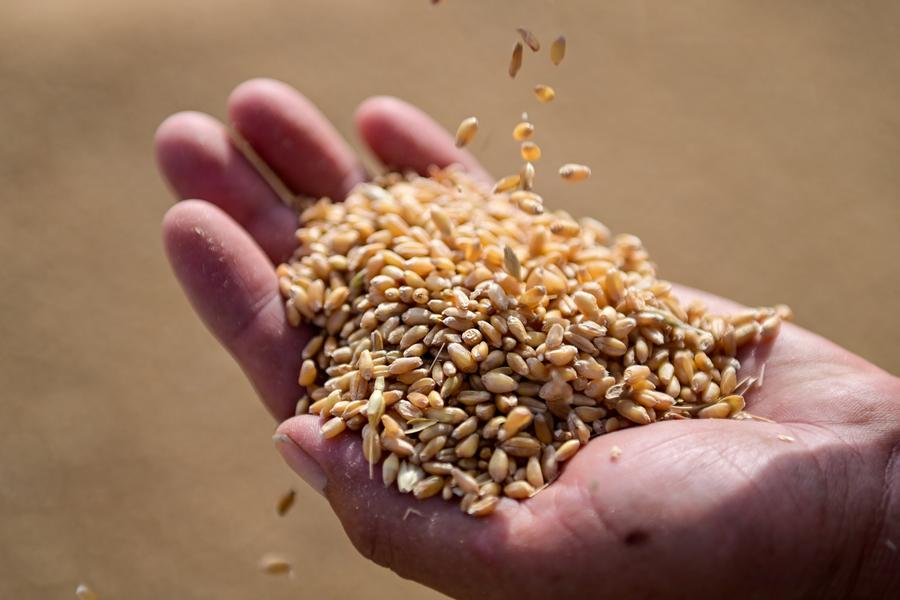
Chinese researchers have decoded a novel salt-tolerance gene in wheat, resulting in yield increases of 5 percent to 9 percent in experimental varieties grown in saline-alkali soils. The study findings have been published in the journal Nature Genetics.
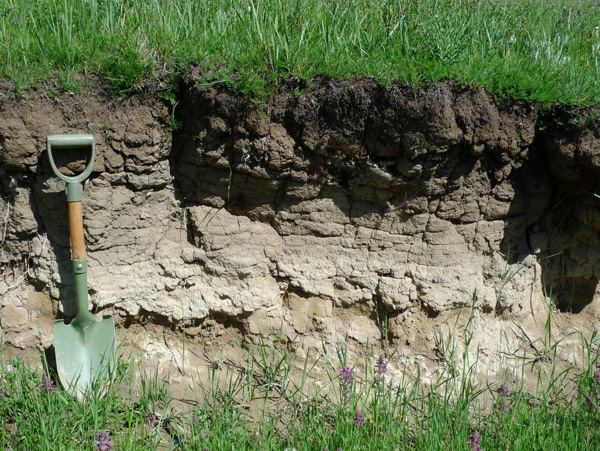
Prof. HUANG Yuanyuan from the Institute of Geographic Sciences and Natural Resources Research found a whopping 2,305 billion tons of carbon stored as SIC in the top two meters of soil worldwide, which is more than five times the carbon found in all of the world's vegetati...

86-10-68597521 (day)
86-10-68597289 (night)

52 Sanlihe Rd., Xicheng District,
Beijing, China (100864)
Copyright © 2002 - Chinese Academy of Sciences


