
A research team led by Prof. WANG Hongzhi from the Hefei Institute of Physical Science of the Chinese Academy of Sciences has developed a dual-functional sensor chip called PlasmoBridge, which bridges plasmonic nanoparticles using aptamer molecules.
This innovative chip enables ultrasensitive, highly specific, and reproducible detection of methotrexate (MTX) in serum, providing a new and feasible strategy for rapid therapeutic drug monitoring (TDM) in clinical settings.
The related study was published in Biosensors and Bioelectronics.
Methotrexate (MTX) is a common chemotherapeutic agent with a narrow therapeutic window and high variability among patients, making real-time blood concentration monitoring crucial for safe and effective treatment. However, traditional methods, such as LC-MS/MS and immunoassays, are often costly, time-consuming, and prone to cross-reactivity, despite being accurate.
To address these challenges, the researchers designed the PlasmoBridge chip by linking silver nanoparticles with aptamer molecules to form a stable plasmonic nanobridge. This structure combines enhanced molecular signal amplification with selective molecular recognition of MTX molecules. When serum samples are applied, the aptamer captures MTX molecules in the "hotspot" region, producing strong surface-enhanced Raman scattering (SERS) signals for highly sensitive and specific detection.
The chip achieved a limit of detection (LOD) as low as 4.64×10⁻⁸ M for MTX in serum. Using a convolutional neural network (CNN) for spectral analysis, the team established a quantitative model with excellent linearity (R² > 0.99) over the range of 1×10⁻⁷ M to 1×10⁻⁴ M.
In a preclinical osteosarcoma mouse model, the PlasmoBridge platform was used to dynamically monitor serum MTX levels and adjust doses in real time with the CNN model. This AI-assisted, TDM-guided dosing approach maintained antitumor efficacy while significantly reducing MTX-induced toxicity to the liver, kidneys, and intestines, thus demonstrating the safety and translational potential of the PlasmoBridge platform for precision medicine.
The "aptamer-nanobridge" strategy introduced in this study enables stable plasmonic hotspot regulation and targeted molecular enrichment. By integrating high sensitivity, rapid detection, and operational simplicity, the approach provides a promising tool for personalized MTX monitoring and broader clinical applications in precision therapeutics.

PlasmoBridge: An aptamer–nanoparticle dual-assembly structure that forms stable plasmonic hotspots, enabling the capture and rapid ultrasensitive detection of methotrexate in serum. (Image by HUANG Guangyao)
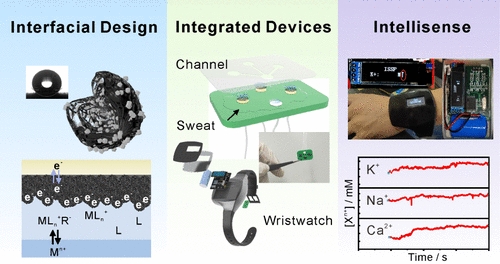
Researchers led by Prof. HUANG Xingjiu of the Hefei Institutes of Physical Science, have developed a unique wristwatch and several modules, including a sensor array, microfluidic chip, signal processing and data display system, have been packed into this advanced watch to...

86-10-68597521 (day)
86-10-68597289 (night)

52 Sanlihe Rd., Xicheng District,
Beijing, China (100864)
Copyright © 2002 - Chinese Academy of Sciences


