Newsroom


Amid growing concerns over wetland degradation and biodiversity loss, a recent study by the South China Botanical Garden (SCBG) has provided evidence that China's investment in coastal wetland restoration yields substantial ecological and economic returns.
Focusing on 237 projects spanning 2000 to 2020, the research team conducted a cost-benefit analysis of the restoration of salt marshes, mangroves, and seagrass beds. The analysis shows benefit-cost ratios ranging from 7.01 to 47.0, providing strong evidence for integrating wetland restoration into climate and coastal planning strategies.
The study was published in Communications Earth & Environment.
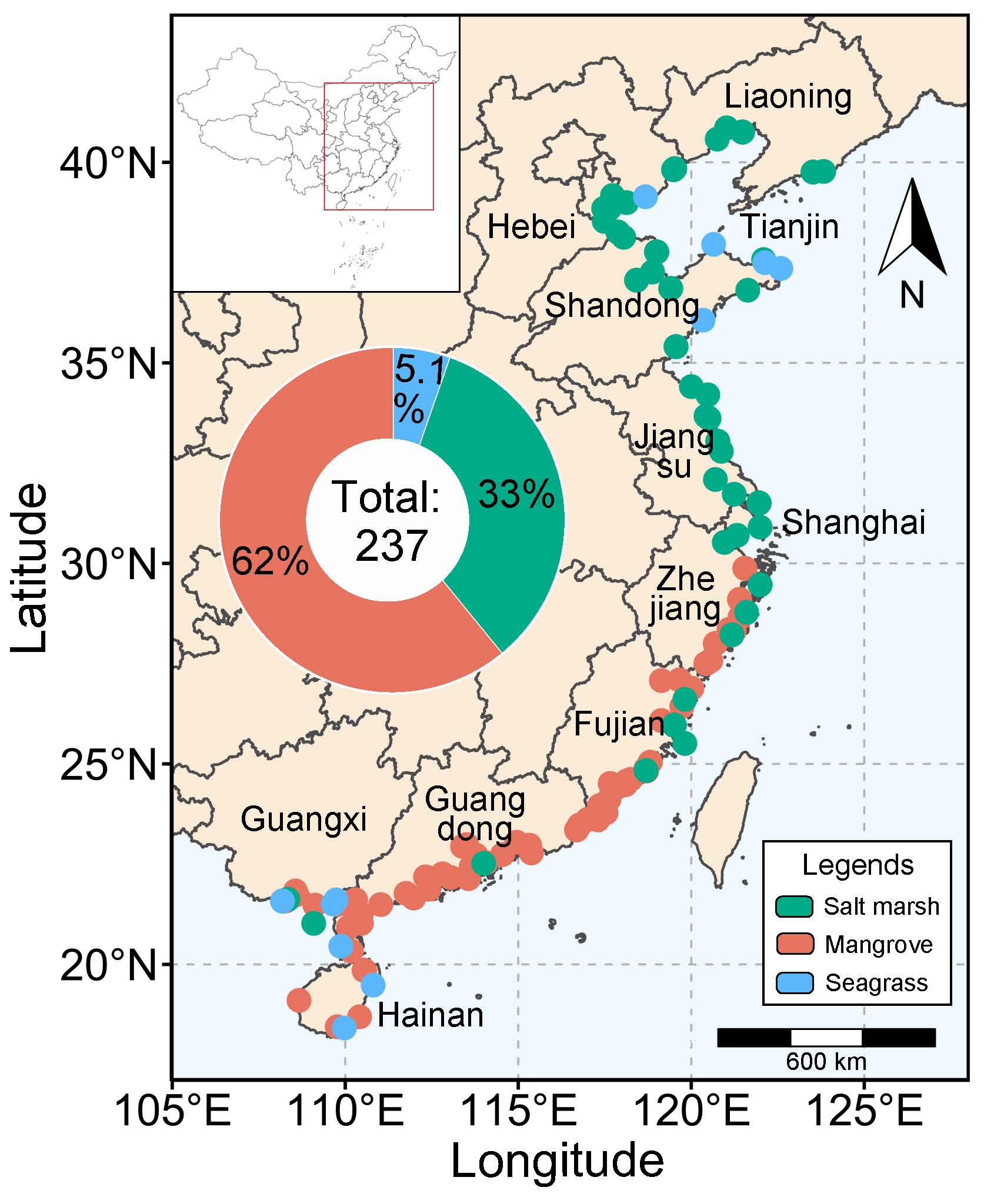
Distribution of China's coastal wetland ecological restoration projects. (Image by ZHOU et al.)
The study finds that with an investment of nearly $13.8 billion, the restoration efforts resulted in a blue carbon gain of 8.5 ± 3.76 million tons and a substantial increase in ecosystem service value, estimated at $95.9 billion to $434 billion. The benefit-cost ratios indicate high profitability, with mangroves returning up to 47 times the initial investment.
The study reveals that while mangroves have been the primary focus of restoration efforts, salt marshes and seagrass beds play equally vital roles in coastal resilience and carbon sequestration. The researchers advocate for a broader inclusion of all coastal wetland types in policy planning to maximize climate mitigation benefits.
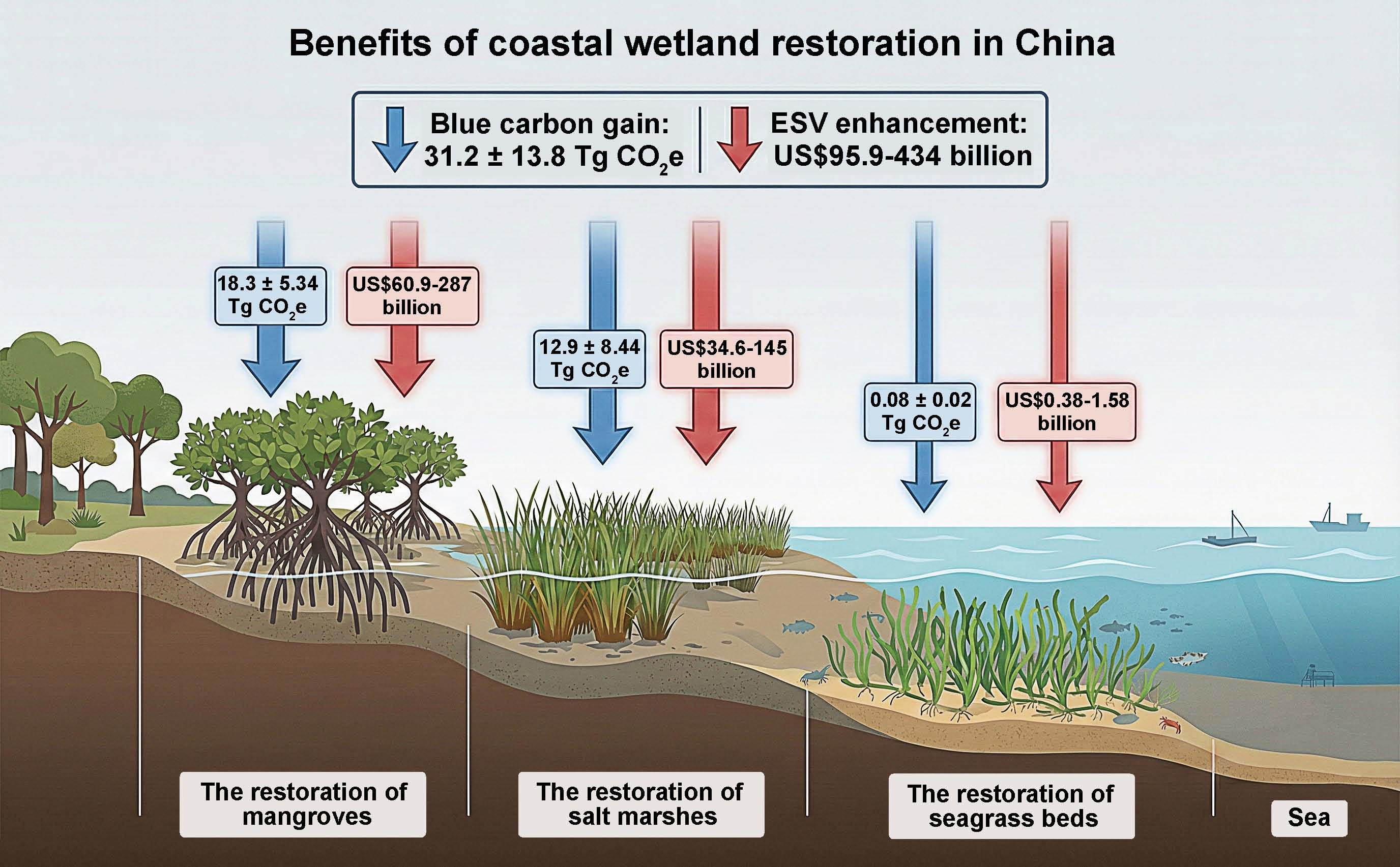
Benefits of different coastal wetland ecological restoration projects in China. (Image by ZHOU et al.)
"These findings provide a strong economic argument for scaling up nature-based solutions," the authors said. This research bridges the gap between ecological science and economic policy, suggesting that scaling up restoration finance is not just an environmental imperative but a sound economic investment.
ZHOU Jinge, a doctoral student at SCBG, is the first author of the paper. Professor WANG Faming, head of the research group, is the corresponding author. This study was supported by the National Key R&D Program, the Hong Kong RGC Strategic Theme Program, the EU Horizon Flagship Program, and the National Natural Science Foundation of China.