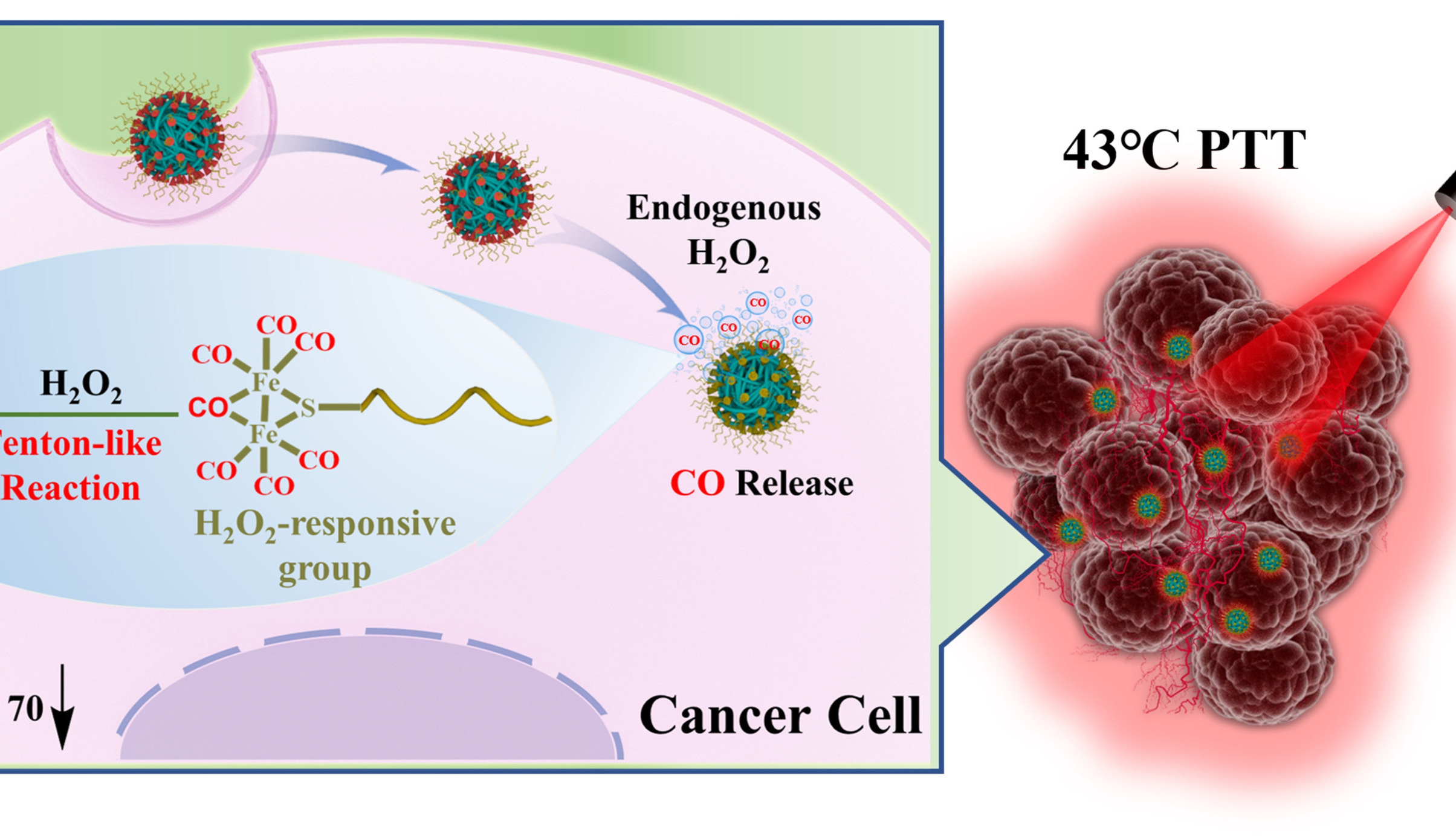
In a study published in Colloids and Surfaces B: Biointerfaces, researchers from the Changchun Institute of Optics, Fine Mechanics and Physics of the Chinese Academy of Sciences developed a novel nanoplatform that integrates photothermal therapy (PTT), ferroptosis, and immunotherapy to combat tumors, which is a synergistic approach to overcoming limitations in conventional cancer treatments.
PTT, which uses light to generate heat and destroy cancer cells, faces hurdles such as uneven heat distribution and tumor resistance. While effective, its reliance on near-infrared-I (NIR-I) light limits penetration depth, reducing efficacy for deep-seated tumors. Researchers addressed this by designing nanoparticles activated in the deeper-penetrating NIR-II window (1000–1700 nm). Additionally, they combined PTT with ferroptosis—a cell death pathway driven by iron-dependent lipid peroxidation—to amplify tumor destruction and suppress recurrence.
Researchers synthesized porous bismuth telluride (Bi2Te3) nanoparticles, decorated with iron oxide (Fe3O4), to create a composite named LBT-Fe. The Bi2Te3 core, grown on lanthanide-doped nanoparticles (LnNPs), exhibited high photothermal conversion efficiency under NIR-II light. Fe3O4 enhanced the Fenton reaction in the acidic tumor microenvironment, accelerating reactive oxygen species (ROS) production to induce ferroptosis. Meanwhile, LnNPs enabled real-time imaging via X-ray, photoacoustic, and NIR-IIb luminescence, guiding precise therapy.
In mouse models, LBT-Fe combined with 1060 nm laser irradiation elevated tumor temperatures to 56°C, effectively ablating cancer cells. The heat also accelerated Fe3O4-mediated ROS generation, disrupting glutathione and glutathione peroxidase 4 defenses to trigger lipid peroxidation. This dual action not only eradicated primary tumors but also released damage-associated molecular patterns, activating dendritic cells and cytotoxic T cells to suppress metastasis. Lung tissue analysis revealed no metastatic nodules in treated mice, underscoring the platform's systemic efficacy.
This study offers a theranostic tool for deep-tumor targeting. The developed composite LBT-Fe minimizes collateral damage while maximizing treatment accuracy. Researchers envision its clinical applications where multimodal imaging guides personalized tumor ablation, reducing relapse risks. Future work will focus on optimizing biocompatibility and scaling production for translational studies.