
Newsroom


Urbanization disrupts the stability of soil organic carbon (SOC) in forest ecosystems, weakening their vital role as carbon sinks. As cities expand and land use intensifies, understanding how urban pressures disrupt the mechanisms underpinning SOC stability has become critical—SOC is a key component of global climate regulation.
A recent review published in Carbon Research by Prof. LU Xiankai's team at the South China Botanical Garden of the Chinese Academy of Sciences, synthesizes the impacts of urbanization on SOC stability in urban forests. Drawing on studies across urban-to-rural gradients, the review identifies three core indices of SOC stability: physical (linked to soil structure and the protection of carbon in soil aggregates), chemical (referring to the chemical forms and binding of soil carbon), and biological (related to microbial activity and soil fauna)—all of which are rendered vulnerable by anthropogenic disturbance.
The research demonstrates that SOC is most stable in minimally disturbed rural forest soils, whereas urban forests suffer substantial losses of critical SOC fractions necessary for long-term carbon sequestration. This pattern is further explained by changes in biological stability and microbial biomass carbon (MBC), both of which decline in urban forest soils. The review also clarifies how urbanization shapes the formation and stability of SOC across forest ecosystems along urban–rural gradients.
The study further reveals that frequent urban disturbances disrupt key stabilization pathways—including the binding of organic carbon to iron (Fe) and aluminum (Al) oxides, a process that typically shields SOC from microbial decomposition.
Notably, the review emphasizes that in urban forests, human-induced stressors—such as atmospheric pollution, landscape fragmentation, altered microclimates, and degraded soil structure—are the dominant drivers of SOC dynamics. This stands in sharp contrast to rural forests, where SOC stability is largely regulated by natural processes: litter input, root turnover, and hydrological conditions.
Given the accelerating pace of urbanization and climate change, the researchers stress that it is imperative for scientists, policymakers, and urban planners to prioritize targeted studies and interventions aimed at protecting soil carbon and enhancing climate resilience in urban areas.
This work was supported by the National Key R&D Program of China, the Guangdong Provincial Key R&D Program, and the National Natural Science Foundation of China.
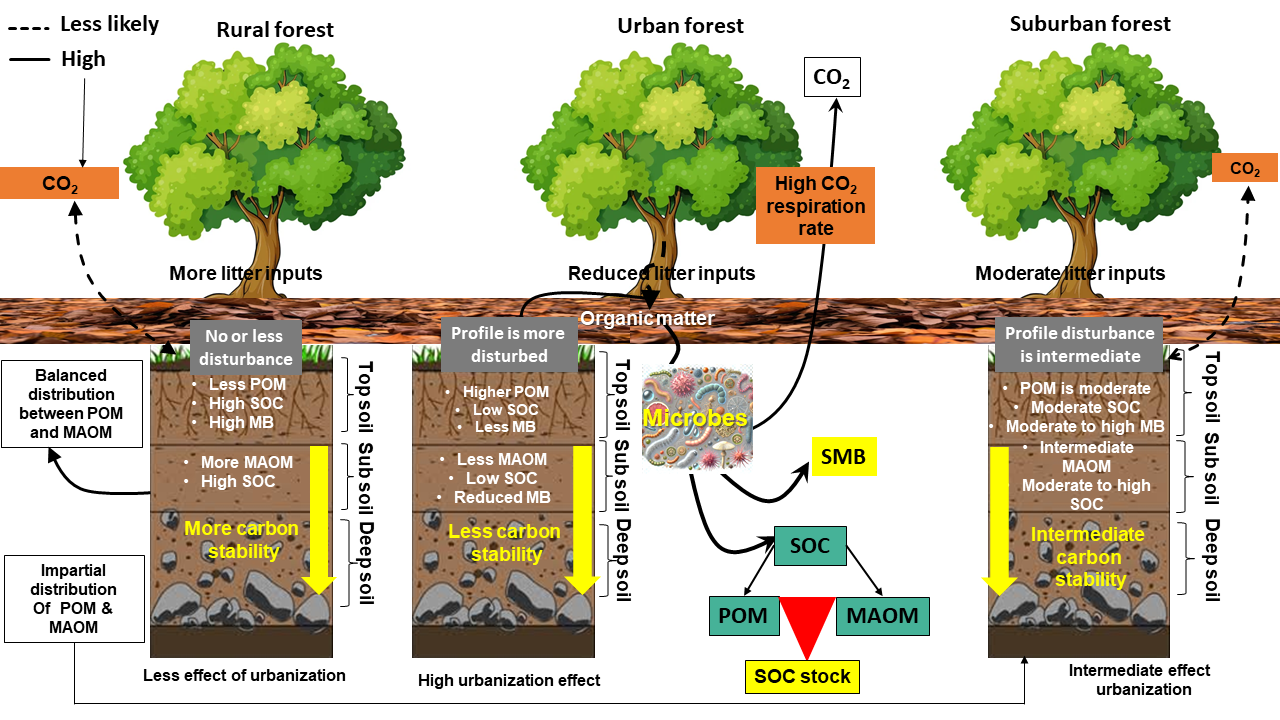
Concept of the formation and distribution of soil organic matter (SOM) from an urbanization perspective. (Image by LU Xiankai et al.)
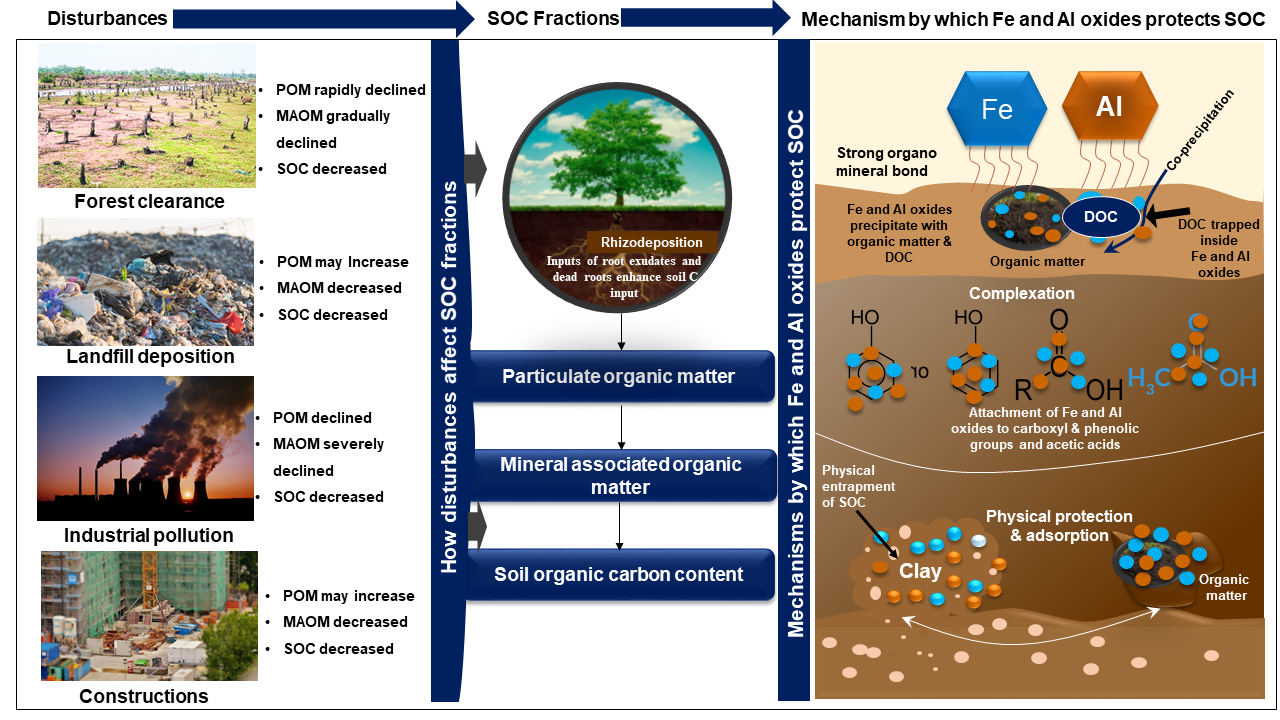
Impacts of anthropogenic disturbances on soil organic carbon fractions and the mechanisms by which iron and aluminum oxides stabilize SOC. (Image by LU Xiankai et al.)
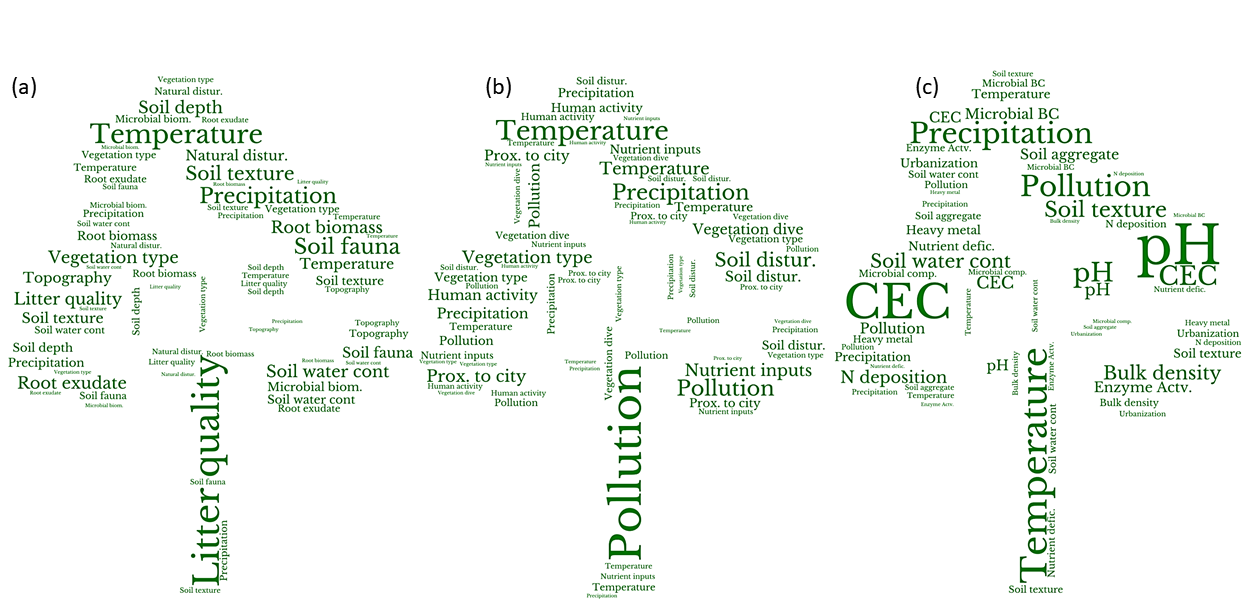
Influencing factors of SOC stability in rural forest (a), sub-urban forest (b) and urban forest (c). (Image by LU Xiankai et al.)
