Newsroom


The genus Argostemma comprises approximately 200 species of small perennial herbs, primarily distributed in the Paleotropics with a concentration in Southeast Asia. These plants are typically lithophytic (growing on rocks) and are highly sensitive to habitat changes, often having very restricted distributions.
In a study published in Phytotaxa, researchers from Xishuangbanna Tropical Botanical Garden (XTBG) of the Chinese Academy of Sciences identified a plant belonging to the genus Argostemma during a field expedition in southern Myanmar in August 2024, and confirmed that the specimen represents a species new to science after careful morphological studies.
Argostemma is a group of small succulent herbs in the Rubiaceae family. The new species is named Argostemma wardii, in honor of British botanist Francis Kingdon-Ward for recognizing his significant contributions to flora exploration in Myanmar.
Argostemma wardii is a perennial lithophytic herb, most morphologically similar to Argostemma kurzii. However, it can be distinguished by its thinly papery, spatulate to elliptic leaves, significantly larger stipules, typically single inflorescences with shorter stalks, fleshy calyx, and larger flowers with subtle venation.
Currently, Argostemma wardii is known only from its type locality in Kun Chaung Reserve Forest in Yegyi Township, Pathein District, Ayeyarwady Region, southern Myanmar. A single small population of fewer than 100 individuals was found growing on mossy rocks near a stream.
Due to limited information on its population size and challenges in assessing threats, researchers provisionally classified the conservation status of the new species as data deficient according to the IUCN Red List Criteria. "This study brings the total number of Argostemma species recorded in Myanmar to fourteen, four of which are now considered endemic," said TAN Yunhong from XTBG.
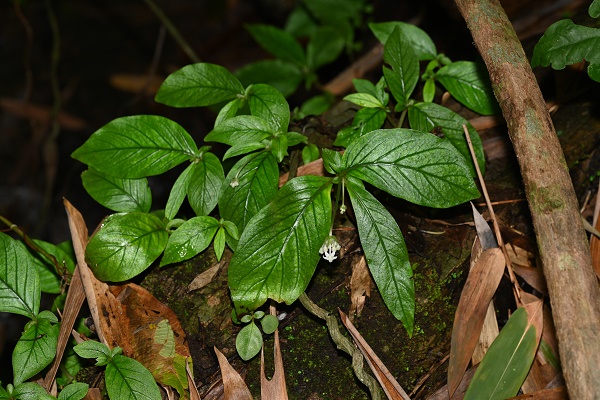
Argostemma wardii (Image by TAN Yunhong)