Newsroom


Mistletoes are obligate stem hemiparasitic plants, possessing the capability for photosynthesis but procuring water and mineral nutrients from their hosts. The relationship between mistletoes and their hosts significantly influences tree performance and mortality in the context of climate change. However, the specific adjustments that mistletoes make to their hydraulics to adapt to their unique canopy environment remain unclear.
In a study published in Tree Physiology, researchers from Xishuangbanna Tropical Botanical Garden (XTBG) of the Chinese Academy of Sciences revealed the exceptional drought-survival mechanisms of mistletoes. They found that mistletoes exhibited superior drought tolerance and hydraulic efficiency compared to their host species, indicating their heightened ability to withstand low water conditions in canopy environments.
Researchers examined 21 fundamental functional traits across eight distinct mistletoe-host species pairs. They focused on how mistletoes adapt to high-tension water conditions in canopy settings, and contrasted the hydraulic efficiency and drought tolerance between mistletoes and host plants.
Researchers revealed that mistletoes consistently demonstrated superior drought tolerance compared to their hosts. In drought periods, mistletoes exhibited more negative midday leaf water potentials, lower turgor loss points, increased resistance to drought-induced damage in their water-conducting tissues, a higher ratio of sapwood to leaf area, denser sapwood, and denser vessel packing.
Although mistletoes demonstrated greater drought tolerance, they had less hydraulic efficiency compared to their hosts. This was evidenced by the reduced rates of water flow through their stems, also known as specific hydraulic conductivity, and their narrower water-conducting vessels. These findings confirmed the ecological trade-off between structures designed for safety, such as drought tolerance, often at the expense of efficiency.
Moreover, researchers found that despite their adaptations to arid canopy conditions and diminished hydraulic efficiency, mistletoes demonstrated lower water use efficiency (WUE) than their hosts, as evidenced by more negative stable carbon isotope values.
Furthermore, they found that mistletoes exhibited stronger internal coordination among their functional traits, both within leaf traits and between leaf and stem traits, compared to their hosts. This high degree of integration suggested a highly specialized strategy for navigating the challenging canopy environment.
"Our findings showed that mistletoes are not merely passive parasites; instead, they exhibit remarkable resilience, utilizing a unique and highly coordinated suite of drought-tolerance traits that often surpass those of their hosts," said ZHANG Yunbing from XTBG.
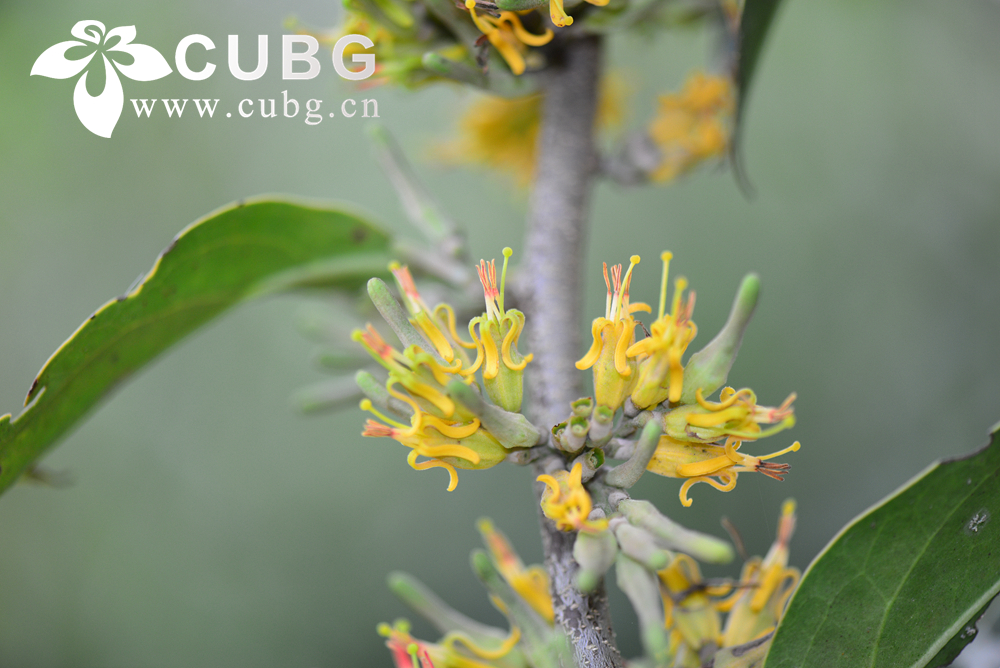
A kind of mistletoe plants (Image by ZHU Renbin)