Newsroom


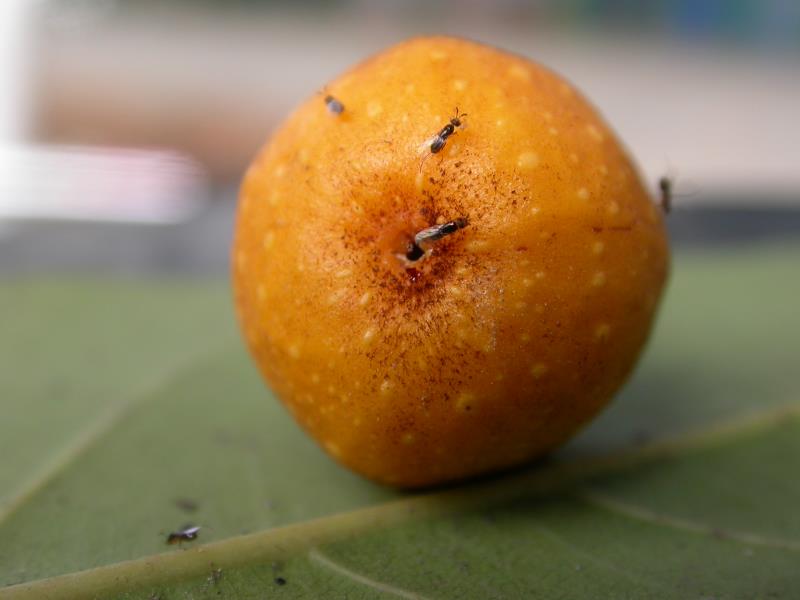
Ficus is one of the largest woody plant genera, with more than 800 species worldwide. Ficus plants have formed a highly specialized pollination relationship with pollinating fig wasp. Investigating the patterns of population structure and pollinator sharing among closely related sympatric species of fig trees seems relevant for gaining insight into how species diversify and coexist in the plant–pollinator mutualism.
In a study published in Journal of Systematics and Evolution, the researchers from Xishuangbanna Tropical Botanical Garden (XTBG) of the Chinese Academy of Sciences and their collaborators elucidated the phenomenon of how closely related species of fig trees can retain their genetic and morphological uniqueness despite sharing the same pollinators and habitats.
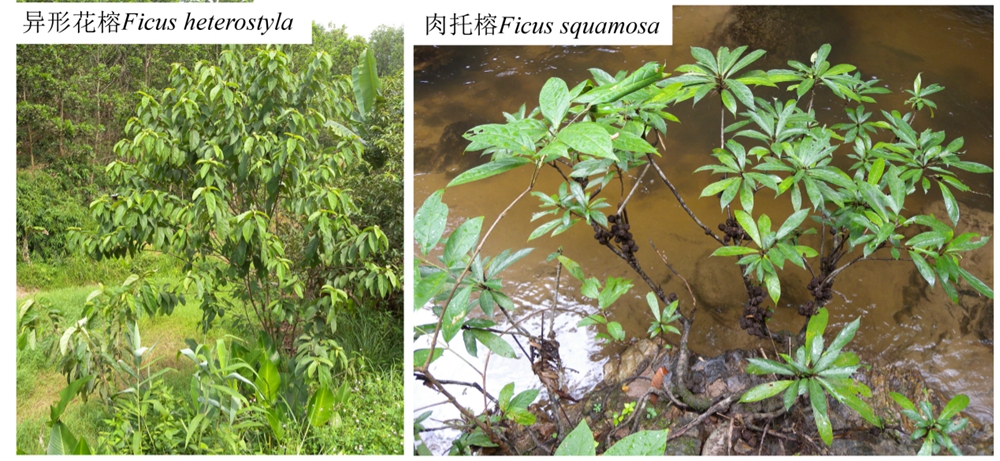
The researchers investigated the coevolutionary scenario of three closely related fig trees (Ficus heterostyla, Ficus hispida, and Ficus squamosa) in the Indo-Burma region and their complex of pollinating wasps, and analyzed population genetics data of plants, chemical volatiles emitted by figs, and phylogenetic relationships among wasps.
Besides, based on microsatellite data from 64 sampling sites, the researchers analyzed the attractant chemical volatiles, and life history traits, such as fruiting mode, population density, habitat preference, and seed strategies, from the fig species, and inferred the phylogenetic relationships of their pollinating wasps.
The results showed that the three fig species shared more than 20 volatile organic compound components, suggesting the potential for cross-attraction of pollinating fig wasps. Phylogenetic analysis suggested that host switching and repeated speciation have been prevalent in pollinating fig wasps, thereby influencing the genetic structure of their host Ficus plants.
Although they shared chemical communication and pollinator exchanges, the three fig species maintained strong genetic and morphological distinction. The strongest gene flow was found in Ficus hispida. Interspecific gene flow mainly occurred between Ficus squamosa and Ficus heterostyla, and weak gene flow also existed between Ficus squamosa and Ficus hispida.
Notably, Ficus hispida exhibited genetic homogeneity throughout its range, yet it associated with at least three distinct pollinator species. In contrast, the genetic divergence of Ficus heterostyla aligned precisely with its pollinator specificity.
“Our study advances the understanding of how mutualistic partners—figs and wasps—coevolve and partition genetic diversity to avoid competitive exclusion. It not only helps to better understand how species differentiate, coexist, and adapt in the field of evolutionary biology, but also has important value in formulating effective conservation strategies,” said PENG Yanqiong from XTBG.
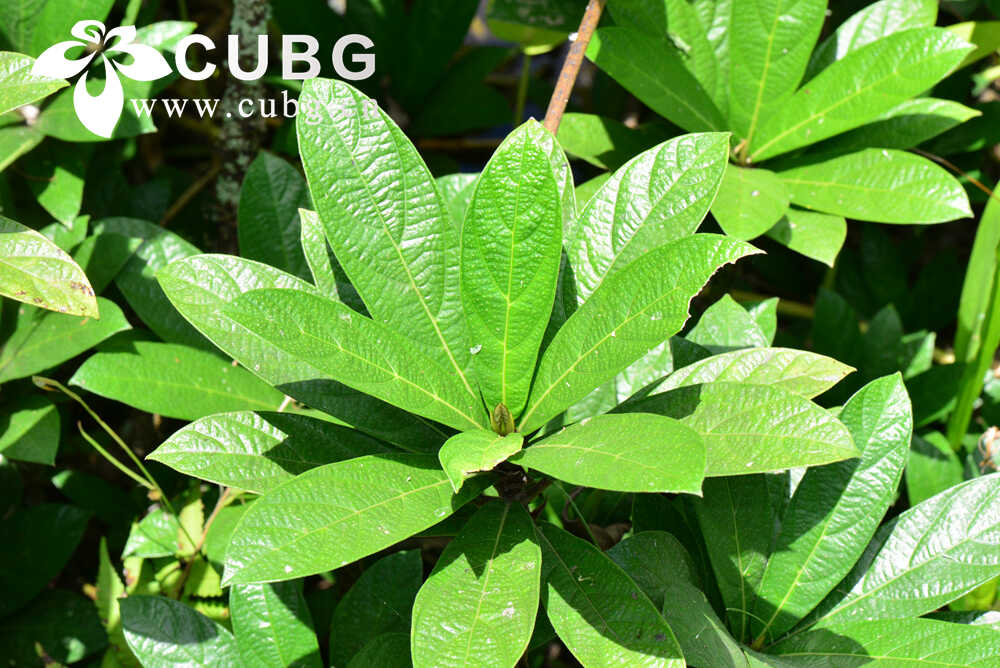
Ficus squamosa (Image by ZHU Renbin)