Newsroom


Lung cancer is one of the most serious malignant tumors affecting human health. During disease progression, some patients develop malignant pleural effusion. As pleural effusion is closely associated with the tumor and its microenvironment, it may contain metabolic information related to cancer. Identifying stable biomarkers in pleural effusion that reflect lung cancer metabolism is important for advancing liquid biopsy applications.
In a study published in MedComm, a research team led by Prof. WANG Hongzhi from the Hefei Institutes of Physical Science of the Chinese Academy of Sciences developed an auxiliary diagnostic strategy for lung cancer-associated pleural effusion based on volatile metabolites in pleural effusion.
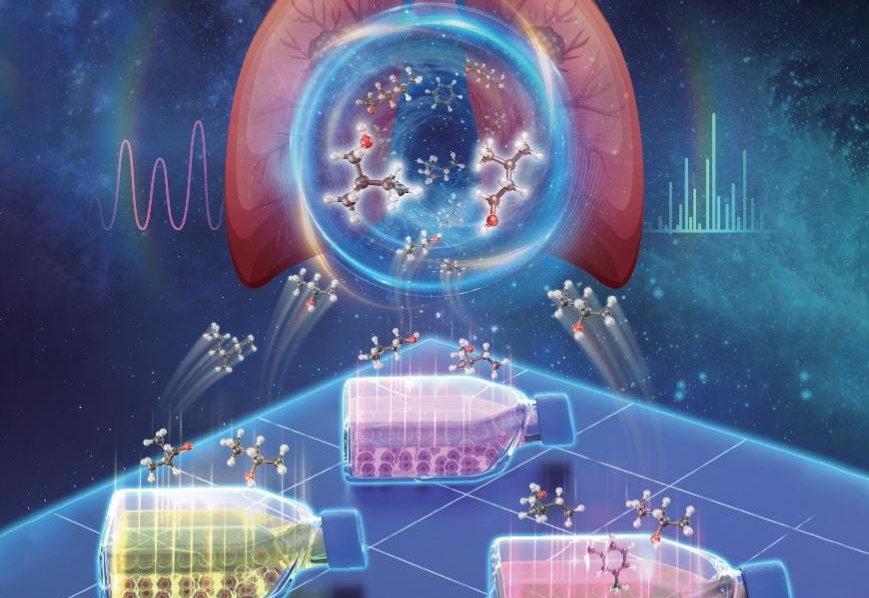
Researchers used headspace solid-phase microextraction combined with gas chromatography-mass spectrometry to analyze volatile metabolic profiles in malignant pleural effusion, benign pleural effusion, lung cancer tissues, and adjacent non-tumor tissues. Instead of simply comparing malignant and benign samples, they performed a cross-analysis between pleural effusion and tumor tissues, which helps identify potential biomarkers that better reflect metabolic changes in lung cancer.
Besides, researchers proposed the concept of "gas biopsy of pleural effusion." Unlike liquid biopsy methods that focus on cells, proteins, or nucleic acids, this concept focuses on volatile metabolic signals in pleural effusion. It offers a new way to explore lung cancer biomarkers by capturing tumor-related "odor molecules" using mass spectrometry.
Moreover, researchers found that hexanal showed consistent changes in both pleural effusion and lung cancer tissues, suggesting a link between tumor metabolism and volatile signals in pleural effusion. A quantitative detection method for hexanal was developed, supporting lung cancer diagnosis.
The findings of this study extend pleural effusion-based liquid biopsy by linking tumor tissue and pleural effusion data.