Newsroom


A recent study published on PLOS Biology has uncovered that the cell fate of Anabaena PCC 7120, a cyanobacterium, is controlled by a dual-threshold system relying on multiple c-di-GMP metabolic enzymes. The study was led by Prof. ZHANG Chengcai from the Institute of Hydrobiology (IHB) of the Chinese Academy of Sciences.
Cyclic-di-GMP (c-di-GMP) is a ubiquitous second messenger in bacteria and regulates a variety of cellular activities. Many bacteria contain a large number of enzymes involved in the synthesis or degradation of c-di-GMP. However, how these enzymes coordinate with one another to maintain c-di-GMP homeostasis remains unclear.
Anabaena sp. PCC 7120 (Anabaena) is a filamentous cyanobacterium that contains 16 genes for c-di-GMP metabolism. Only one of them, CdgS, has been identified as the primary diguanylate cyclase (DGC) responsible for cell size regulation. Thus, the potential compensatory or redundant roles of the remaining 15 c-di-GMP metabolic proteins in cell size control and other physiological processes need to be elucidated.
In this study, the researchers used the cyanobacterium Anabaena as a model and created cdG0 and cdGmax strains by deleting all eight and 14 genes, respectively, that encode enzymes with c-di-GMP degradation and synthesis domains. They also generated a collection of deletion mutants carrying different numbers of these genes.
The researchers demonstrated that c-di-GMP in Anabaena not only modulates cell size but is also indispensable for cell viability. Quantitative analysis established two critical physiological thresholds in vivo: a minimal c-di-GMP level (80%) required for cell size maintenance, and a lower lethal threshold (50%) essential for survival.
"Through systematic analysis, we identified the dominant DGCs and phosphodiesterases (PDEs) in this cyanobacterium and propose that the c-di-GMP metabolic enzymes function in a manner that simulates an electromechanical dual-relay system to control c-di-GMP homeostasis," said Prof. ZHANG.
Further analysis found that in this system, 13 enzymes constitute a baseline signal, two act as a responsive relay, and one serves as an emergency relay that is activated only when the c-di-GMP concentration drops to a lethal level.
These findings demonstrate how nature repurposes the conserved signaling molecule c-di-GMP to construct novel regulatory architectures adapted to specific environmental contexts. Beyond revealing novel adaptation strategies in cyanobacteria, this mechanism provides a blueprint for engineering synthetic biological systems that require multi-level regulation, researchers said.
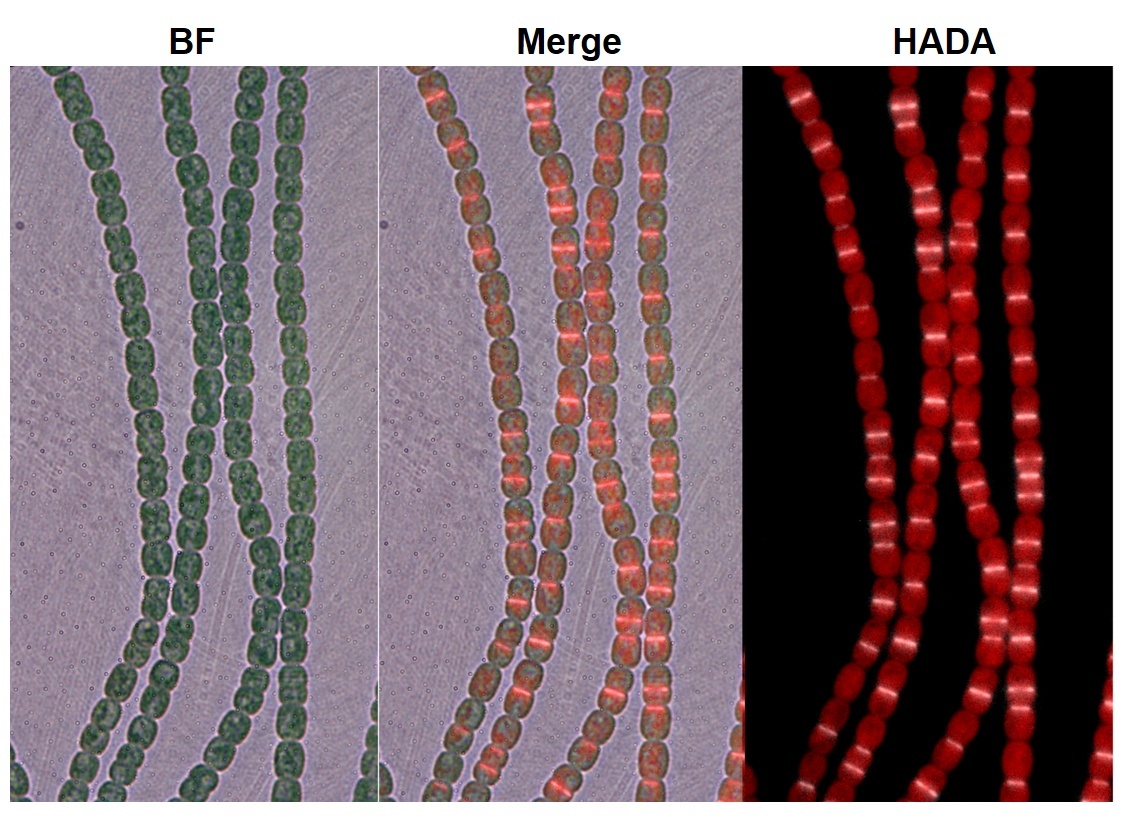
Cell size and cell fate regulation of a cyanobacterium (Image by IHB)