Newsroom


Researchers from the Xishuangbanna Tropical Botanical Garden (XTBG) of the Chinese Academy of Sciences and Liaocheng University have recently identified a new species of lichen-forming fungus in the subtropical forests of southern China.
The findings, published in Phytotaxa on April 17, also include the first recorded instance of a related species in China, further illuminating China's rich but under-documented lichen diversity.
The newly described species, named Pallidogramme norstictica, was collected from tree bark at an elevation of approximately 2,470 meters in Yunnan Province's Ailao Mountains. A member of the Graphidaceae family, the lichen is characterized by a brown, crust-like thallus and slit-like fruiting bodies. Distinctive features include muriform (chambered) ascospores that turn violet when stained with iodine and the presence of norstictic acid.
While morphologically similar to Pallidogramme chapadana, the new species is distinguished by its specific chemical makeup and fewer septa in its ascospores. It can be recognized by its entire, later slightly striated labia, uncarbonised excipulum, clear hymenium, muriform ascospores, and norstictic acid.
In addition to the new species, the researchers reported Pallidogramme divaricoides for the first time in China. Previously known only from India and Nepal, this species was found on tree bark in the Damingshan Mountains of the Guangxi Zhuang Autonomous Region at an elevation of roughly 1,240 meters. It is identified by its dark-grey, forkedly branched lirellae and transversely septate ascospores, lacking detectable lichen substances.
"Our findings once again confirm that the Ailao Mountain region is a highly active hotspot for lichen diversity," said LI Su of XTBG.
Specimens of both species are deposited in the Fungarium of the College of Agriculture and Biology of Liaocheng University.
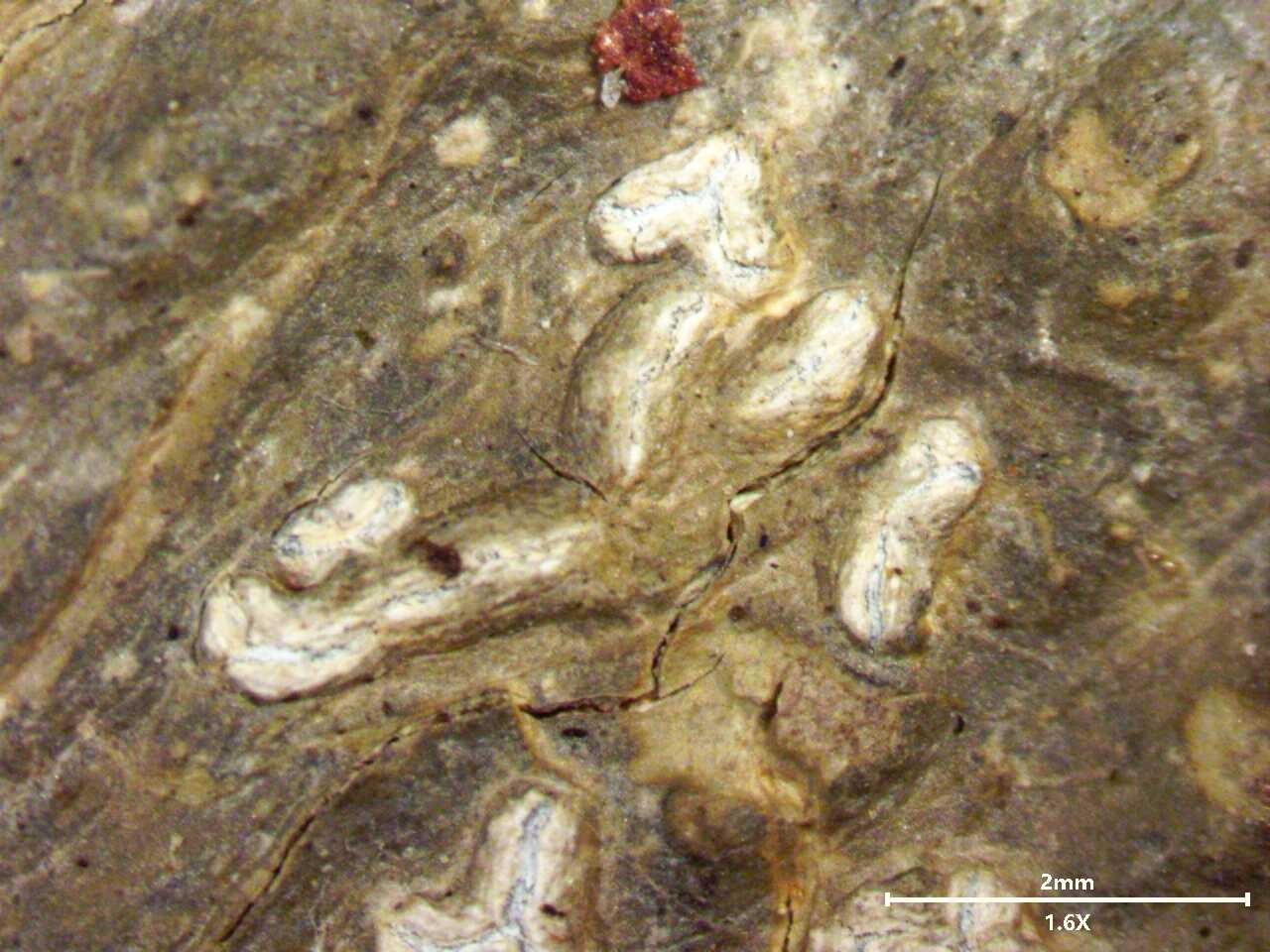
Pallidogramme norstictica (Image by JIANG Shuhao)
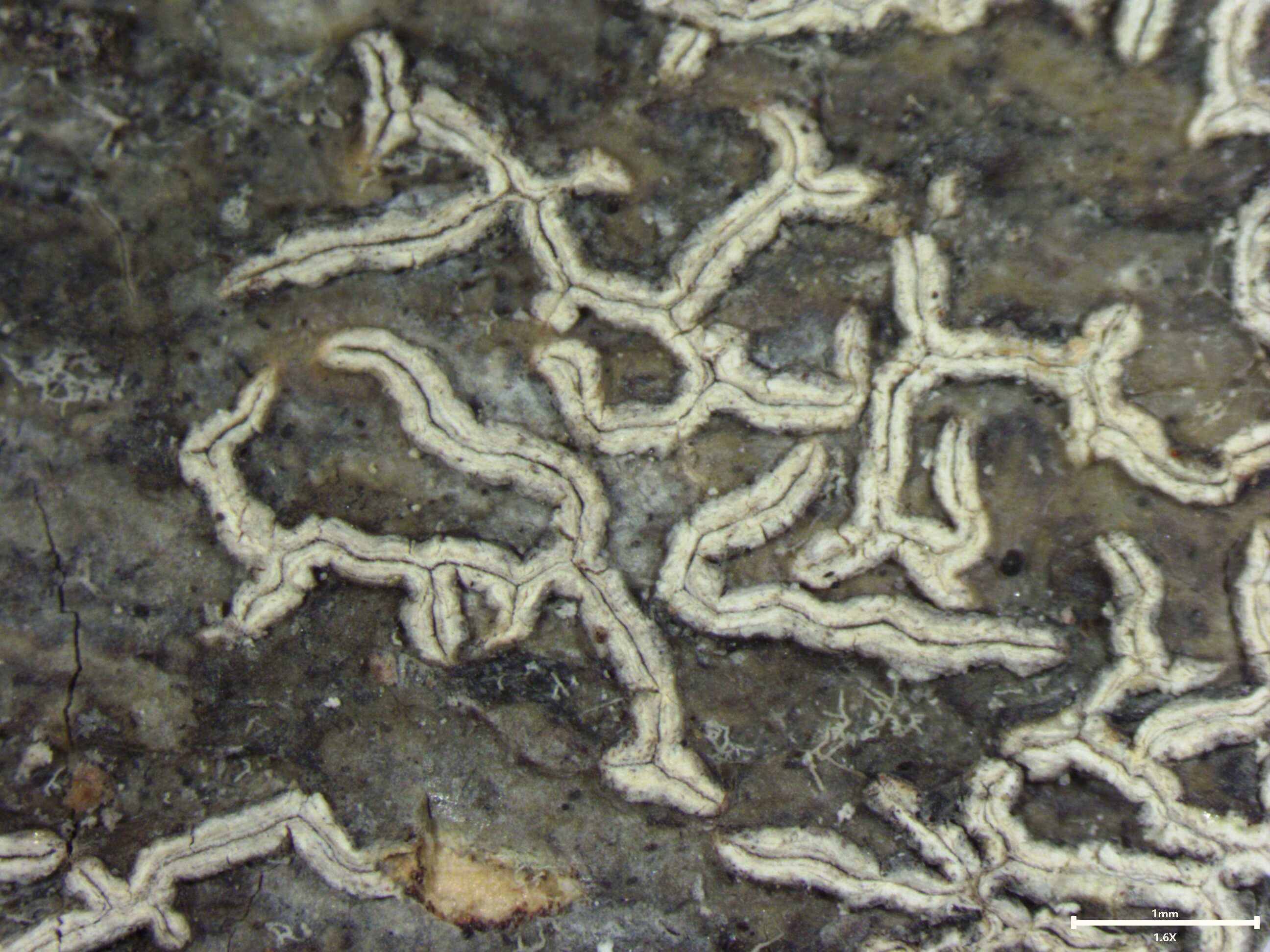
Pallidogramme divaricoides (Image by JIANG Shuhao)