Newsroom


Upconversion nanoparticles (UCNPs) convert low-energy infrared light into visible light through anti-Stokes emission. The signal contrast of luminescent nanoprobes based on rare earth UCNPs depends on the efficiency of luminescence resonance energy transfer (LRET), which is limited by the distance between the energy donor (UCNPs) and the energy acceptor (less than 10 nm). Since UCNPs are typically larger than 20 nm, LRET efficiency is reduced, limiting signal contrast and sensitivity.
In a study published in Analytical Chemistry, a team led by Prof. JIANG Changlong from the Hefei Institutes of Physical Science of the Chinese Academy of Sciences developed a novel aptamer-mediated energy acceptor sensitization strategy which enhances the sensitivity of UCNP-based sensing systems and enables the creation of high-contrast reverse dual-signal upconversion luminescent materials for the highly sensitive detection of trace substances in complex environments.
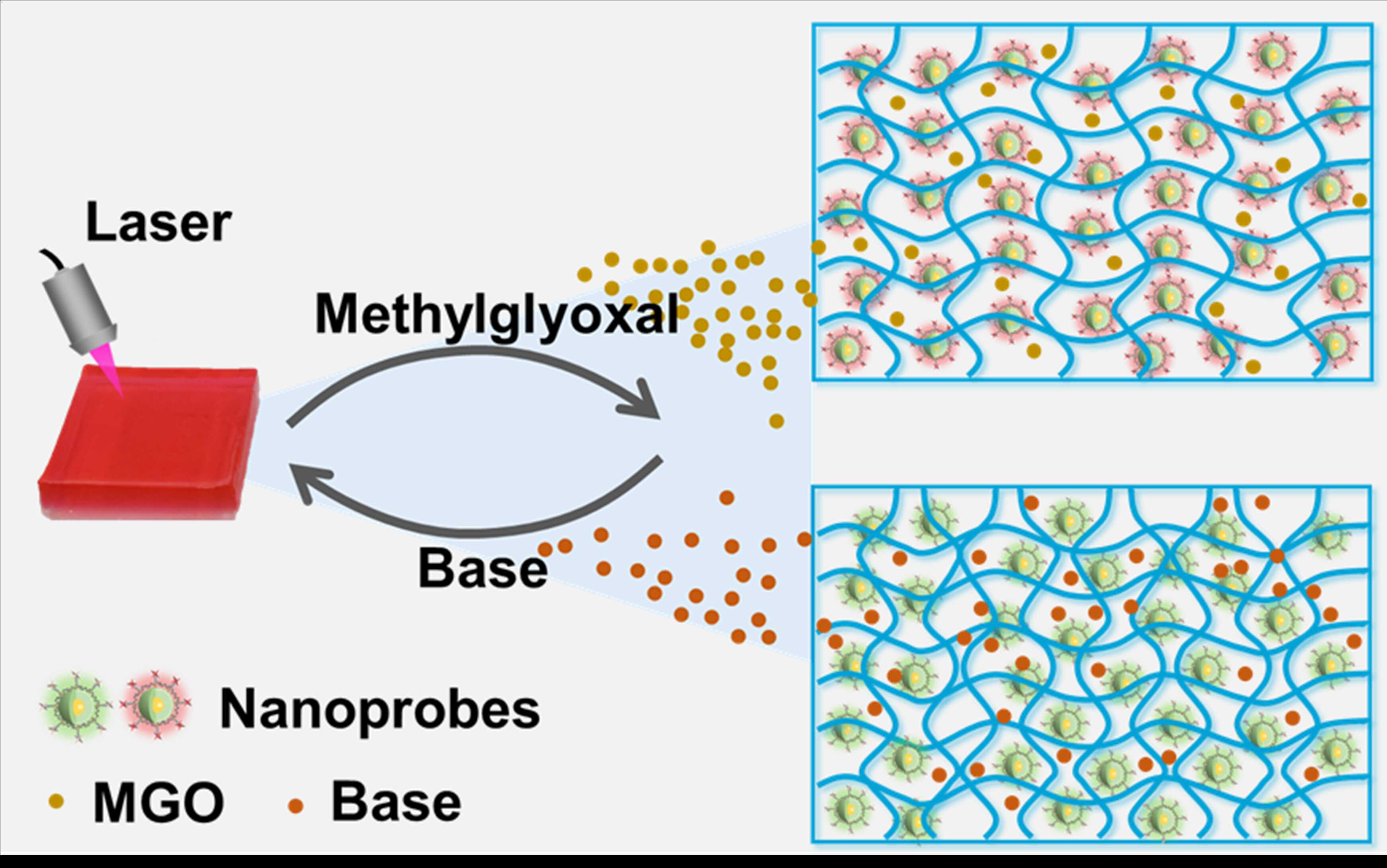
Researchers conjugated Cy3-labeled aptamers onto the surface of UCNPs, and created a nanoprobe for sensitive detection of Pb2+ ions. Upon the introduction of Pb2+, the aptamers underwent a conformational change, forming a G-quadruplex structure. This shortened the distance between the Cy3 dye and UCNPs, activating the LRET process. The energy transfer from UCNPs to Cy3 quenched the green upconversion luminescence at 540 nm, while sensitizing Cy3 fluorescence at 565 nm, producing a reverse sensing signal.
By using the luminescence intensity ratio of 540 nm to 565 nm, the nanoprobe achieved a detection limit as low as 51 pM, with high selectivity and excellent anti-interference capability, even in complex sample matrices. This new strategy holds potential for improving UCNP-based sensing probes, offering more sensitive and reliable detection for applications ranging from environmental monitoring to biomedical diagnostics.