
Newsroom


Zero-thermal-expansion (ZTE) materials are widely used in precision optics, cryogenic equipment, sensors, where even small temperature changes can cause performance problems. However, creating ZTE materials that conduct heat efficiently while remaining mechanically robust has long been challenging. Most conventional ZTE materials transfer heat poorly, while ZTE metal matrix composites often sacrifice strength and toughness due to the large amount of brittle negative-thermal-expansion particles they contain.
Inspired by the hierarchical structures found in nature, a research team from the Hefei Institutes of Physical Science of the Chinese Academy of Sciences has developed a novel bio-inspired laminated ZTE metal matrix composite that overcomes these limitations. The design is based on the "brick-and-mortar" laminated structure of abalone nacre, which is known for its exceptional strength and toughness, as well as the thin inner membranes of bamboo stems that enable efficient transport of water and nutrients.
The results were published in Acta Materialia.
In this study, the researchers designed a laminated composite consisting of alternating pure copper foil layers and copper layers reinforced with Zn₀.₅Sn₀.₃Mn₀.₂NMn₃ (ZSM) NTE particles showing negative thermal expansion. In this architecture, the copper foil layers serve as continuous heat-transfer pathways, effectively preserving the high intrinsic thermal conductivity of copper. Consequently, a laminated composite incorporating 100-μm-thick copper foils exhibits a thermal conductivity about three times higher than that of conventional homogeneous ZTE metal matrix composites, ranking among the highest values reported for ZTE materials.
"The key innovation lies in separating the functions of heat conduction and thermal expansion compensation into different layers," said Prof. TONG Peng, who led the team, "By allowing copper to act as a 'thermal highway' while the NTE-reinforced layers regulate dimensional stability, we avoid the performance compromises seen in traditional ZTE composites."
This structure also significantly improves mechanical performance. The copper foil layers reduce stress concentration and suppress crack propagation, resulting in multiple cracks forming and deflecting instead of one catastrophic failure. This mechanism enables the composite to absorb much more fracture energy. The flexural fracture energy reaches 53 kJ·m⁻², which is four times higher than that of the monolithic composite.
Meanwhile, thermal stresses at the semi-coherent interfaces between adjacent layers offset each layer's intrinsic expansion and contraction. This stress-coupling effect results in zero thermal expansion perpendicular to the lamination direction, ultimately producing isotropic ZTE behavior.
"This design provides a new paradigm for developing ZTE materials with both high thermal conductivity and high toughness," said Prof. TONG. "It expands the application potential of ZTE composites, especially in environments involving repeated thermal shocks and mechanical impacts."
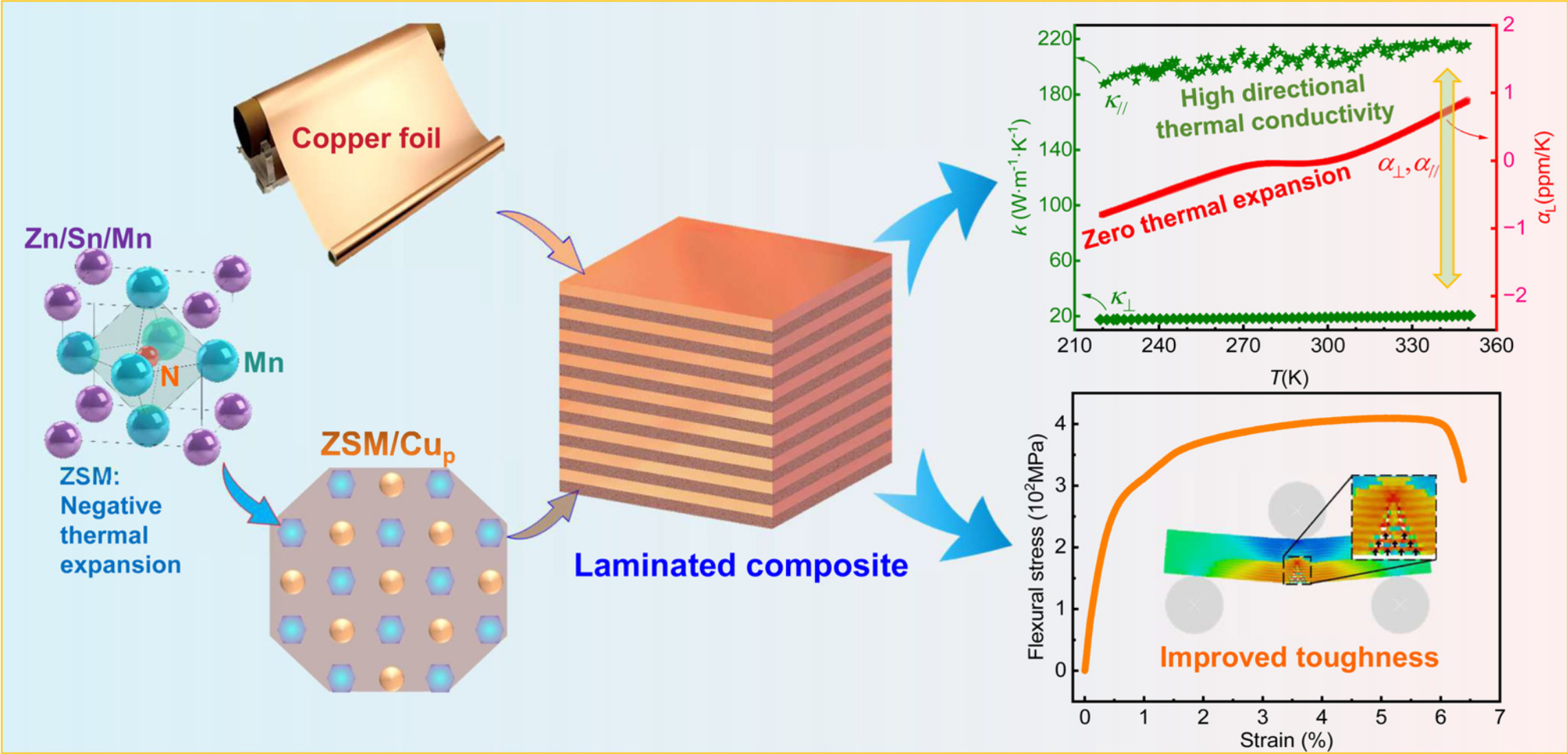
A bioinspired laminated copper composite exhibiting zero thermal expansion, high directional thermal conductivity and superior toughness. (Image by TONG Peng)
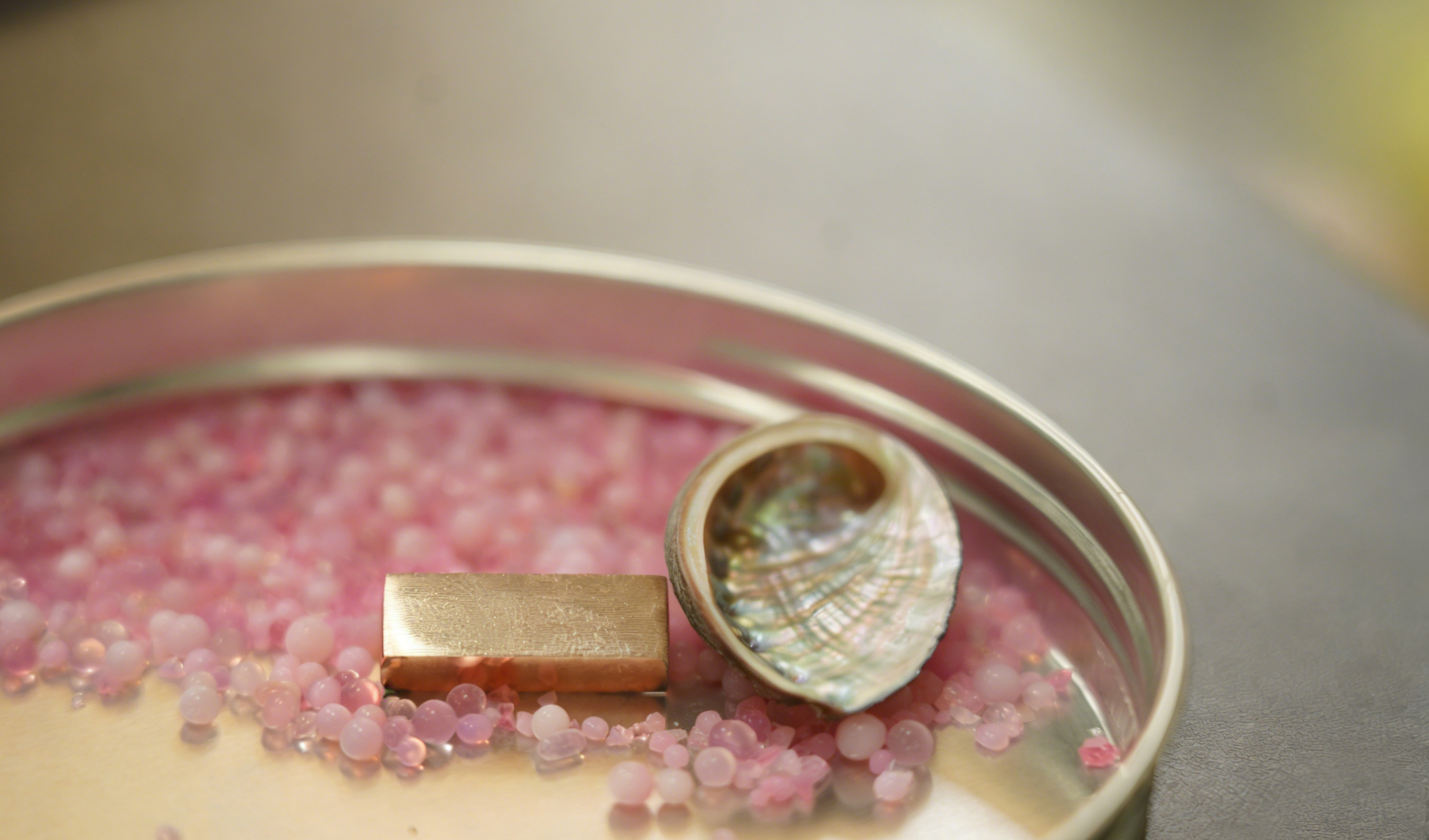
Nacre-inspired copper composite achieves zero thermal expansion (Image by ZHAO Weiwei)
