Newsroom


A research team from the Hefei Institutes of Physical Science of the Chinese Academy of Sciences has advanced mid-infrared laser technology by developing a new Er³⁺-doped SGGG (Er:SGGG) laser gain medium that operates at 2.8 μm.
"This new crystal can produce a mid-infrared laser at 2.8 μm," said Prof. SUN Dunlu, who led the team. "It could help make future medical treatments and environmental sensing tools more precise and efficient."
The related studies were published in Optics and Laser Technology, Infrared Physics and Technology, and Optics Express.
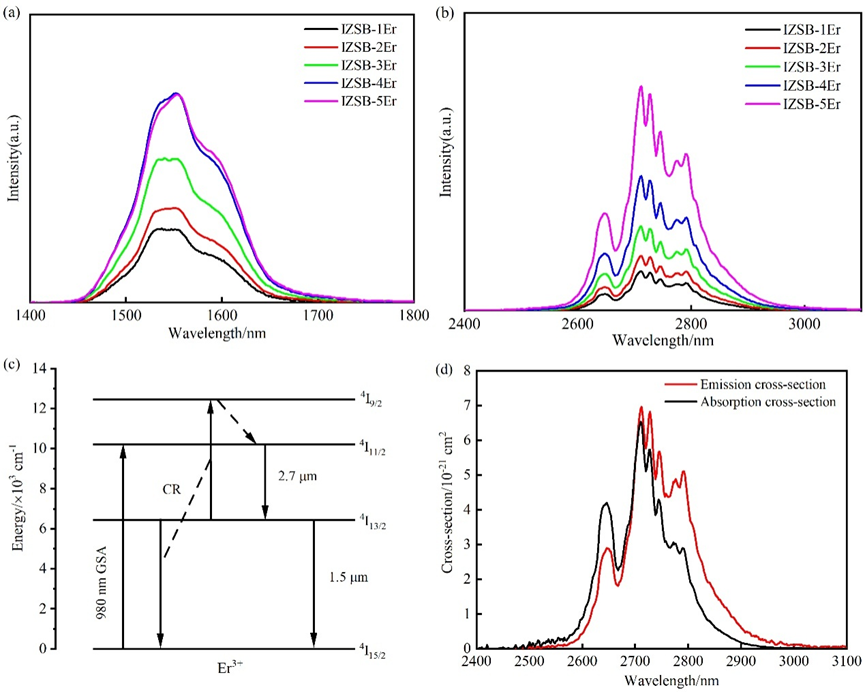
The 2.8 μm wavelength, strongly absorbed by water, makes these lasers useful for biomedical, remote sensing, and nonlinear optics applications. Er³⁺ ions can be efficiently pumped by 970-nm laser diodes, and the SGGG mixed-crystal structure broadens absorption and fluorescence, thereby improving laser performance.
Using the Czochralski technique, the team successfully grew a high-concentration (30 at.%) Er:SGGG crystal that exhibited a broadened absorption band near the 970-nm pump wavelength. Initial pulsed-laser tests confirmed stable 2.8 μm output and favorable energy conversion characteristics.
To improve continuous-wave (CW) laser operation, the team designed a dual end-pumping configuration that enhanced output stability and output power compared to single end-pumping. The researchers further explored thermal and optical optimization by fabricating SGGG/Er:SGGG and SGGG/Er:SGGG/SGGG bonded structures. These bonded crystals demonstrated better beam characteristics, and the dual pumping geometry helped reduce thermal stress during CW laser operation.
The results suggest that bonded end caps can effectively enhance mid-infrared beam quality and that optimized pumping strategies can contribute to more efficient, thermally stable operation.
These developments highlight the potential of Er:SGGG as a promising gain medium for compact and efficient 2.8 μm lasers, with possible applications in medical treatment, environmental monitoring, and advanced photonic systems, according to the team.
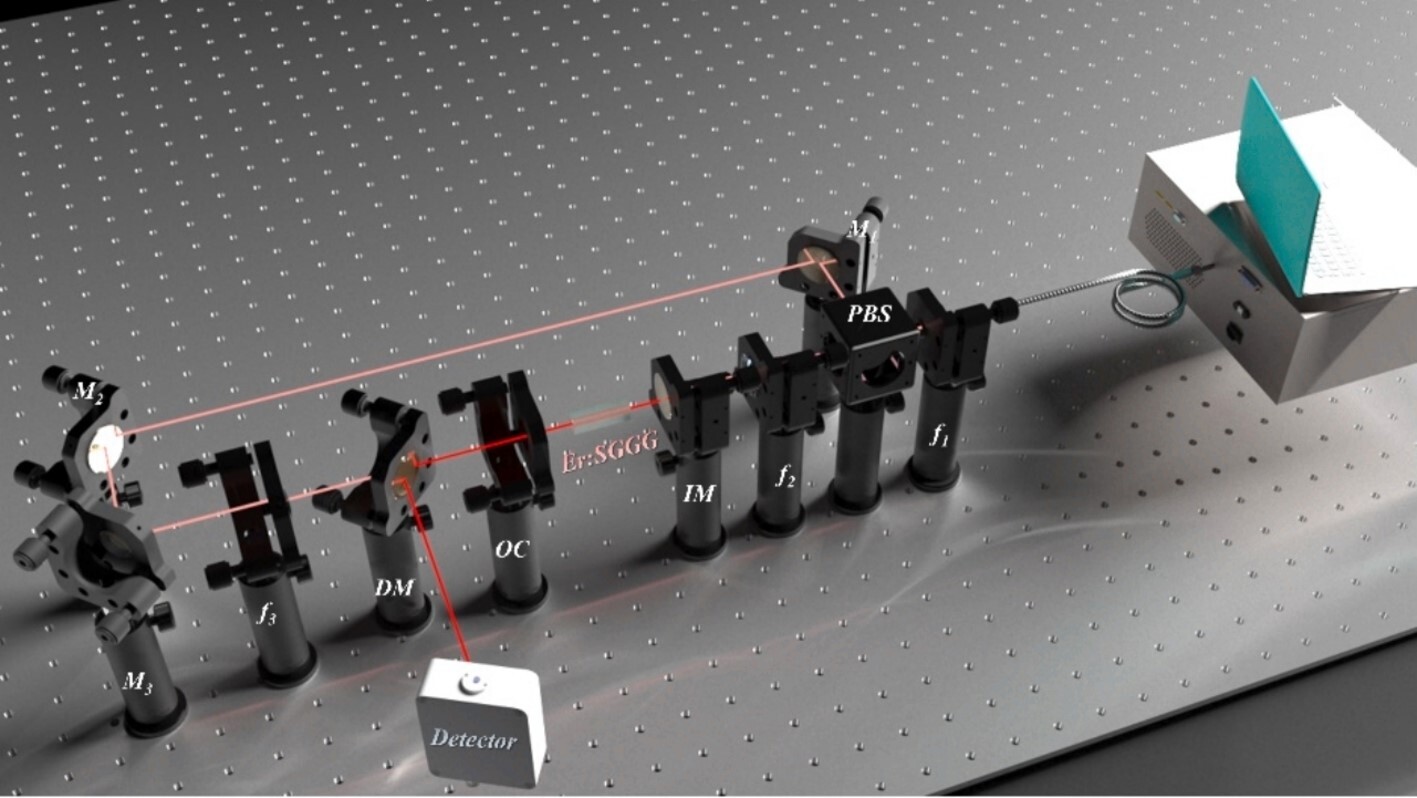
Dual end-pumping laser structure for Er: SGGG laser crystal (Image by LI Hongyuan)