Newsroom


Maintaining genomic integrity in germ cells is essential for fertility and species survival. However, the DNA repair mechanisms that preserve genome integrity in primordial germ cells (PGCs), which undergo high levels of replication stress, remain largely unknown. Although the evolutionarily conserved nuclease TatD protein family has been implicated in multiple DNA-related processes, its in vivo functions in vertebrates remain unclear.
In view of this, a research team led by Prof. TU Qiang from the Institute of Genetics and Developmental Biology of the Chinese Academy of Sciences (CAS) has revealed that Tatdn2 participates in DNA damage repair in mitotic PGCs by promoting the resolution of R-loop structures, providing new insights into the mechanisms that maintain genome stability in PGCs, as well as the physiological role of Tatdn2.
The study was published in Nucleic Acids Research on December 17.
The Tatdn2 protein was initially identified through multi-omics datasets generated in the team's earlier work in 2020. Subsequent experimental validation and cross-species analyses confirmed its conserved expression in germ cells with mitotic activity.
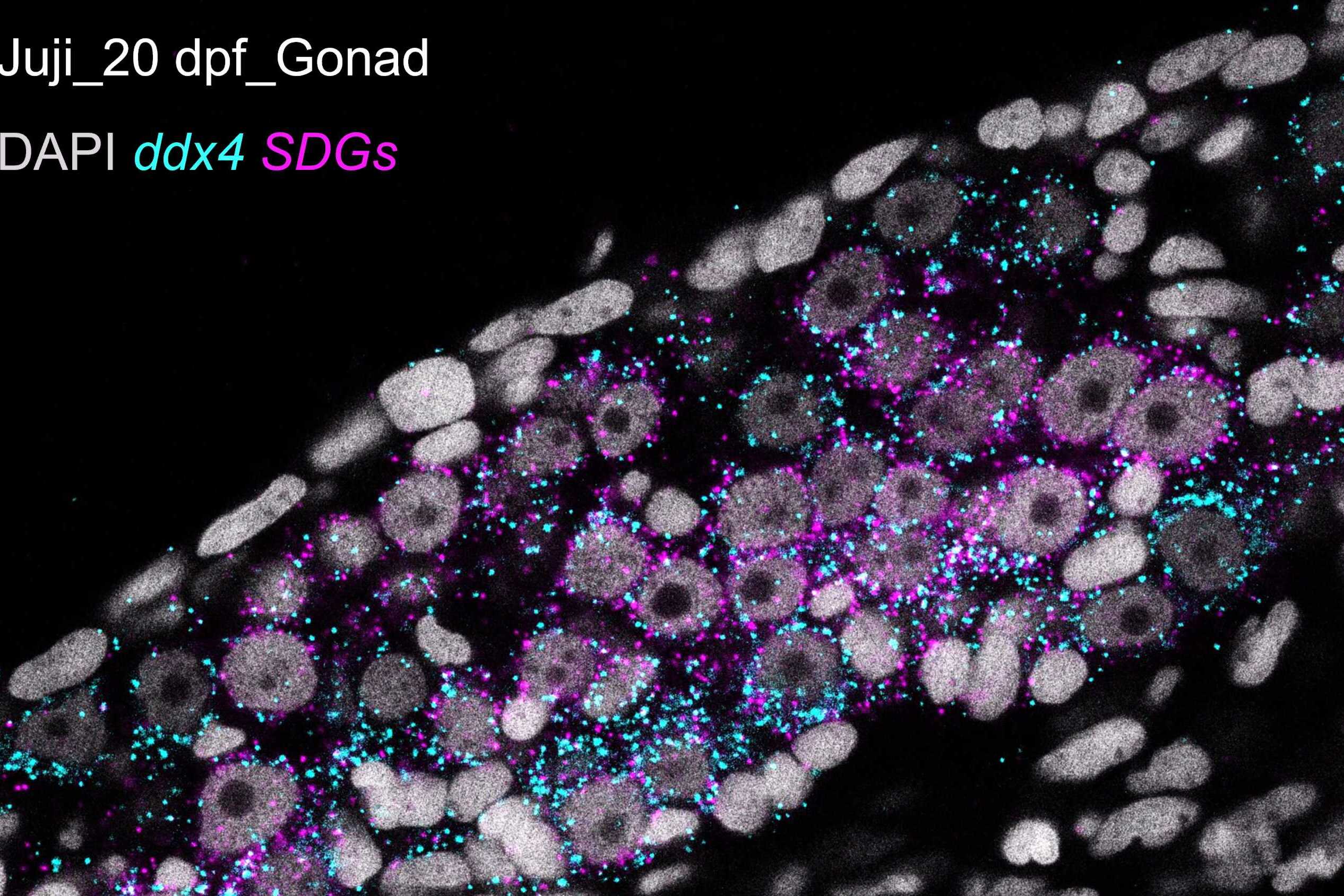
Using the medaka fish (Oryzias latipes) as a model organism, the researchers found that loss of tatdn2 resulted in the depletion of mitotic PGCs. As a consequence, all mutant individuals developed as males and were infertile. Further investigations showed that tatdn2 knockout markedly increases R-loop accumulation and DNA damage, which subsequently triggers apoptosis in PGCs.
This study not only fills a critical gap in understanding how PGCs cope with replication stress but also expands the known biological functions of the TatD protein family. By linking Tatdn2 to R-loop resolution and germ cell survival, these findings lay the groundwork for future research on the role of Tatdn2 in human reproductive disorders and diseases related to genome stability.
This work was supported by the National Natural Science Foundation of China, the CAS Key Research Program, and the CAS Project for Young Scientists in Basic Research, among others.