
Newsroom


A joint research team from the Shanghai Astronomical Observatory (SHAO) of the Chinese Academy of Sciences and Sun Yat-sen University has improved the quality of long-term light curves of active galactic nuclei (AGN). By stacking multi-epoch imaging data from the Zwicky Transient Facility (ZTF), the researchers effectively enhanced the signal-to-noise ratio (SNR) of the observational data, enabling high-quality reconstruction of AGN light curves that were previously inaccessible due to their intrinsic faintness.
This advancement, published in The Astrophysical Journal Supplement Series, reveals long-term variability and color evolution characteristics with unprecedented clarity. These results provide critical observational constraints for probing the physical mechanisms and accretion dynamics of AGN central engines.
Variability is a typical observational characteristic of AGNs. Analyzing their light curves is a key diagnostic tool for investigating the accretion physics of the central supermassive black holes. However, for low-luminosity and high-redshift AGNs, the limited depth of single-epoch observations leads to issues such as large photometric errors, sparse sampling, and undetectable variability in their light curves, limiting the variability studies of these objects.
To address these challenges, the researchers proposed an innovative forward-modeling data processing strategy. Instead of post-processing existing light curves, this approach starts with the raw imaging data. Single-epoch exposures are binned and stacked following the temporal sequence of observations. This procedure effectively integrates multiple short exposures, improving the detection limit by approximately 2.0–2.5 magnitudes. Although short-timescale variability is sacrificed, the method robustly preserves long-term variability on month-to-year scales, making it ideal for AGN variability studies.
Applying the method to the ZTF observations in the extended groth strip (EGS) field, the researchers constructed high-quality light curves for 73 AGNs. Compared with traditional ZTF data products, the advantages of the new approach are evident in several aspects, it substantially enhances photometric precision for strongly variable AGNs while retaining the original long-term trends; it suppresses noise contamination and clearly reveals variability for objects with brightness near or below the single-exposure detection threshold, extending variability studies to significantly fainter AGN populations.
Using these improved light curves, the researchers further analyzed color evolution and found that 56 of the 73 AGNs (77%) exhibit a significant "bluer-when-brighter" trend, consistent with thermal fluctuations in the inner accretion disk as the dominant mechanism of long-term optical variability.
"Light-curve quality is often the main bottleneck in extracting reliable physical parameters in optical variability studies of supermassive black holes and binary black hole systems," said ZHENG Zhenya, corresponding author of the study.
By co-adding multiple short-exposure images, the researchers significantly improved detection depth and SNR, enabling systematic acquisition of high-quality light curves for low-luminosity AGNs that were previously beyond reach. This provides a solid data foundation for studying the accretion processes and long-term evolutionary behaviors of AGN central engines.
Corresponding author MA Bin added that their next step is to develop automated data reduction pipelines to extend this method across other ZTF fields and to systematically build a high-precision optical light-curve dataset for low-luminosity AGNs. "This dataset will offer essential observational support for understanding black hole growth and evolution in the early universe," he said. "The technical framework is also highly scalable and will serve as a methodological reference for processing deep-field observations from the Multi-Channel Imager (MCI) onboard the China Space Station Telescope (CSST), thereby enhancing the scientific returns of CSST-MCI in time-domain astronomy."
This work was supported by the National Key R&D Program of China, the China-Chile Joint Research Fund, the China Manned Space Program, and other projects.
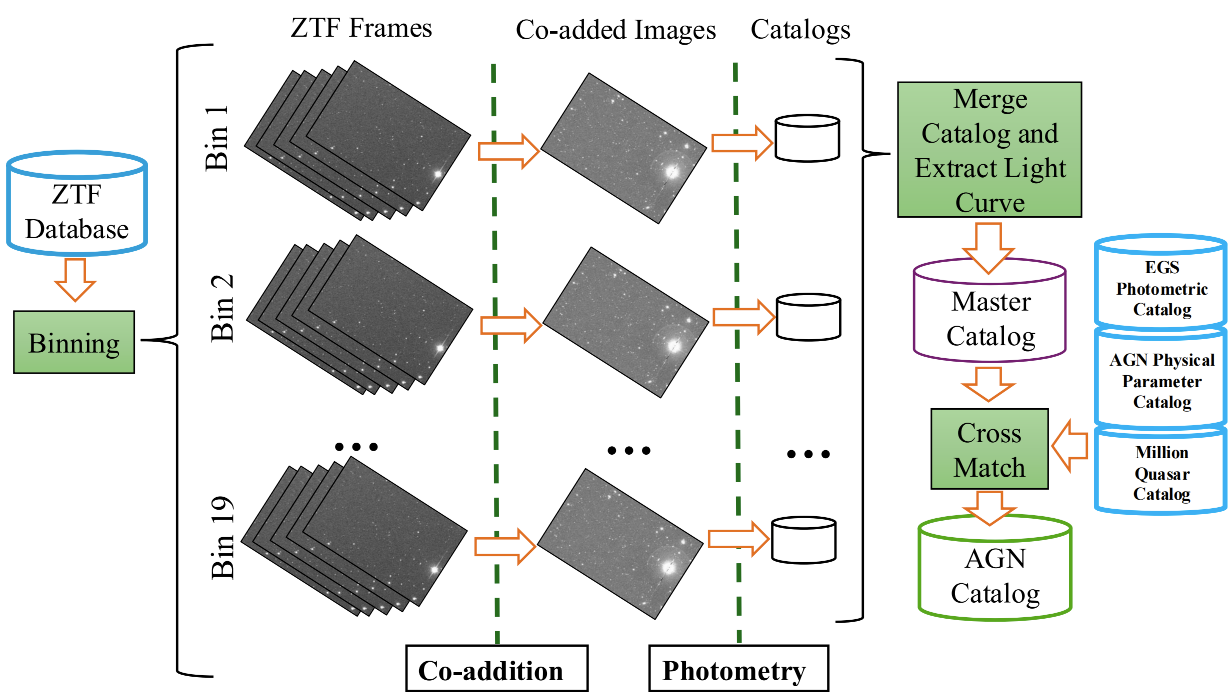
Figure 1. Data processing workflow. (Image by SHAO)
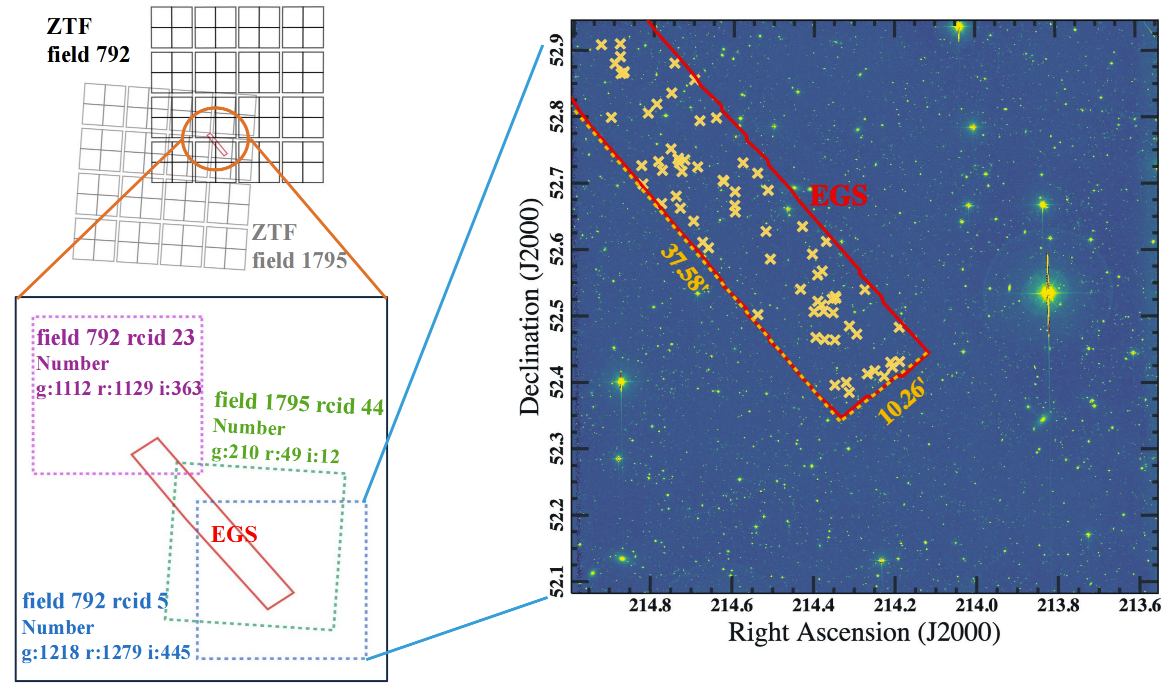
Figure 2. Schematic diagram of the overlapping region between ZTF and the EGS field. Left panel: Coverage of the EGS field by three ZTF CCD-quadrants and statistics of observation counts per band (2018-2024). Right panel: Overlap region between the selected CCD-quadrant (blue area) and the EGS field (red outlined area, approx. 10.2' × 37.5'). Yellow "×" marks represent the 73 AGN sample extracted in this study. (Image by SHAO)
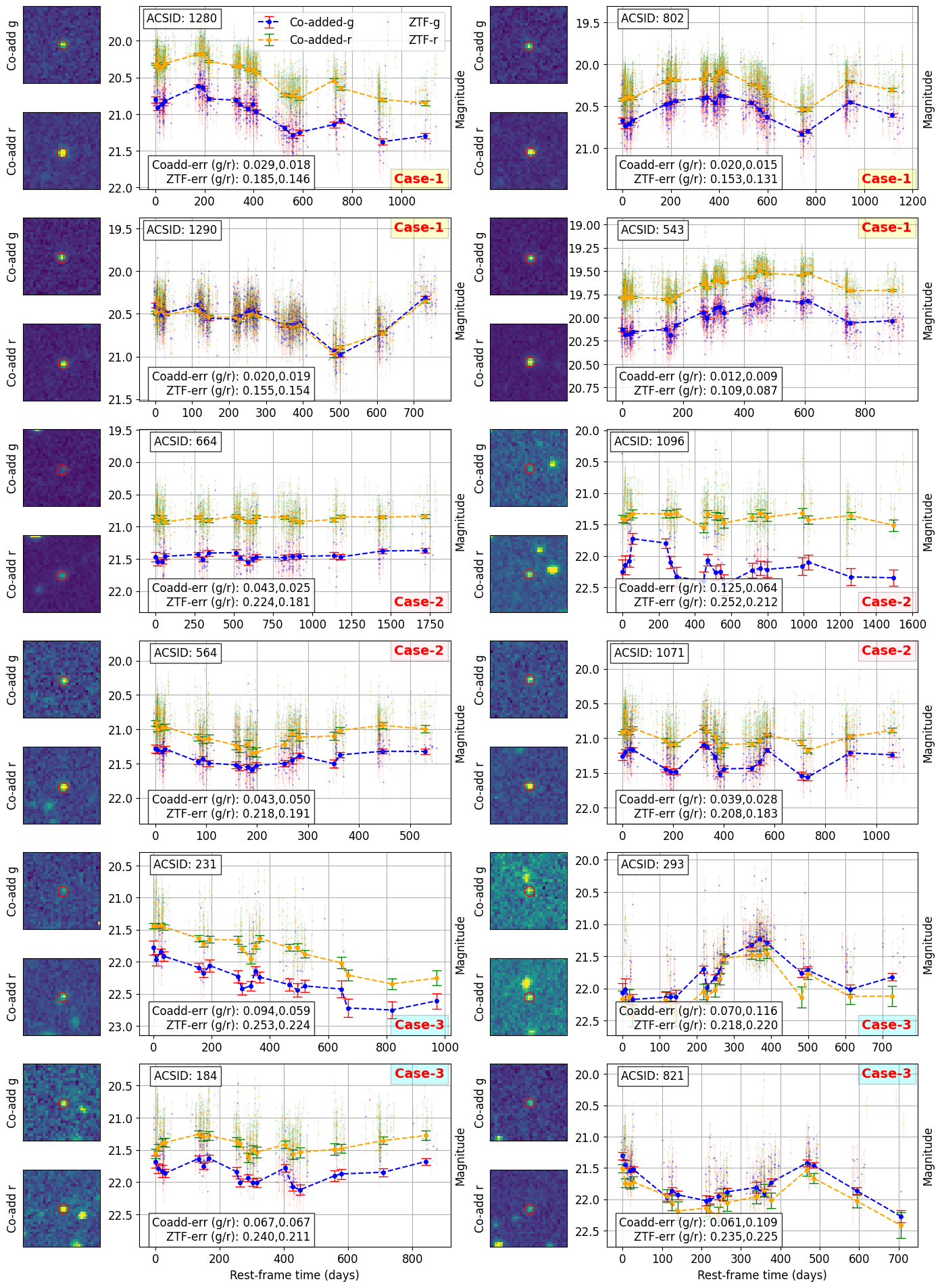
Figure 3. Comparison of light curves from the stacking method and traditional ZTF data, highlighting the performance advantages of the new method in three typical scenarios. (Image by SHAO)
