Newsroom


Invasive plants pose a major threat to biodiversity and ecosystem stability. Previous studies have focused on single species invasions. However, little is known about the ecological impact of the co-invasion of alien plants.
In a study published in Soil Ecology Letters, researchers from the Xishuangbanna Tropical Botanical Garden (XTBG) of the Chinese Academy of Sciences showed that co-invasion of alien plants has a synergistic effect on soils, which fundamentally alters assembly processes and interactions within soil fungal ecosystems.
Researchers investigated assembly processes and symbiotic networks of different fungal taxa in soils affected by the co-invasion of four Asteraceae species (Chromolaena odorata, Ageratina adenophora, Tithonia diversifolia, and Bidens pilosa), and compared samples of these soils with those of non-invaded soils.
They categorized the fungi into two groups: conditionally rare and abundant taxa (CRAT) and conditionally rare taxa (CRT), and found that each group exhibited distinct responses to the plant co-invasion, which reflects their different survival and filtering strategies.
Besides, researchers found that plant co-invasion increased the alpha diversity of soil fungi and broadened their ecological niche. Although the co-invasion increased the network complexity of fungal communities, it reduced their stability, indicating that co-invasion posed a threat to the stability of soil microbial communities.
Moreover, researchers found that the assembly of fungal communities was primarily driven by deterministic processes rather than random chance. This deterministic control was enhanced by plant invasion, making environmental factors even more critical in determining fungi survival. In shaping the fungal community structure, soil pH and the ratio of carbon to phosphorus were identified as the most important factors.
"The co-invasion of these plants seems to create a new set of rules for the soil fungal community. By enhancing nutrient utilization efficiency, the invasive plants help the microbial community thrive even under limited resource conditions, which may be a key to their successful invasion," said ZHENG Yulong from XTBG.
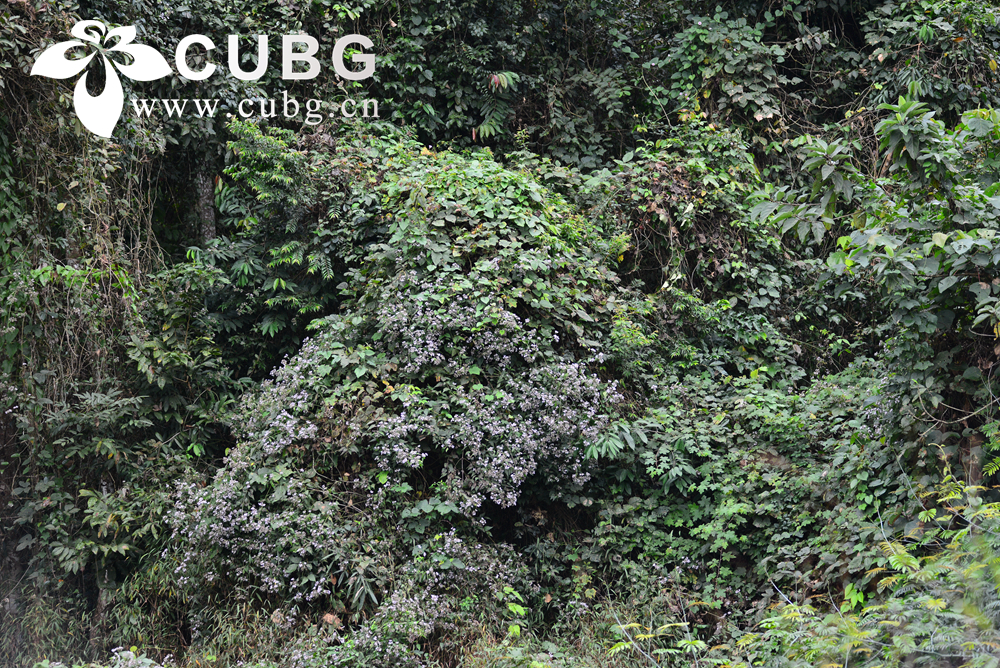
Chromolaena odorata, an invasive species. (Image by ZHU Renbin)