Newsroom


A research team from the Institute of Genetics and Developmental Biology of the Chinese Academy of Sciences has identified a promising genetic target that could significantly enhance soybean yield, especially in high-density planting conditions. This discovery provides a new breeding strategy to develop high-yield soybean varieties and meet the rising global demand.
The study was was published in Plant Communications on December 16.
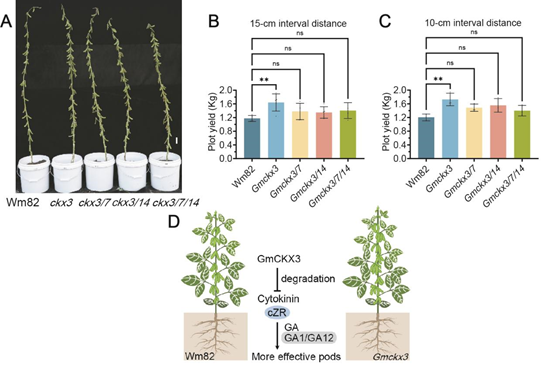
In this study, the researchers identified GmCKX3, a gene that functions as a negative regulator of soybean productivity. Using CRISPR–Cas9–mediated gene editing to disrupt GmCKX3. They observed substantial increases in pod number and seed yield per plant. Notably, with increases exceeding 40%, lodging resistance remained unaffected.
Importantly, the enhanced yield was not accompanied by a decline in seed quality. Seed oil content remained unchanged, and protein content showed a modest increase—an outcome favorable for both food and industrial uses.
Improving soybean yield is challenging because it depends on a complex interplay of developmental and physiological traits. The identification of GmCKX3 provides new mechanistic insight into how cytokinin metabolism coordinates floral development and pod formation. Loss of GmCKX3 activity alters hormone homeostasis, redirecting resources toward reproductive growth and higher productivity.
The study also revealed that favorable natural GmCKX3 alleles had been unintentionally selected during soybean domestication and breeding, highlighting the gene's agronomic importance.
These findings underscore the potential of precise gene editing to tailor crops for modern intensive agriculture, positioning GmCKX3 as a key target for developing next-generation, high-yield soybean cultivars.