2024


A recent study led by Prof. HAN Wei at the Hefei Institutes of Physical Science of the Chinese Academy of Sciences, has shown that low-dose Cold Atmospheric Plasma (CAP) treatment could effectively slow down tumor growth.
The research, published in Advanced Science, suggests that CAP could be a promising new way to treat cancer, offering a potential alternative to traditional treatments.
CAP, a type of ionized gas, is known for its ability to selectively target tumor cells without harming surrounding healthy tissue. While it has shown great potential in killing cancer cells, a significant challenge has been its limited penetration depth into tumors, as the active ingredients quickly lose their effectiveness in deeper tissues.
To address this, the researchers developed a novel method for measuring the effects of CAP on tumors. They proposed a methodology to evaluate the biological impact of CAP in vivo by assessing levels of oxidative damage and cell death across continuous depth layers in tumor tissues, which helps determine the actual effective depth of CAP treatment.
“Even low doses of CAP were effective in slowing down tumor growth,” said Dr. NIE Lili, a member of the research team.
CAP damages mitochondria, the cell's energy powerhouses, disrupting energy production and inducing oxidative stress. This energy deficiency and cellular stress prevent proper cell division, leading to a type of cell death known as "mitotic catastrophe," thereby inhibiting tumor growth.
“Our works provided valuable theoretical support and research methods for further study and investigation of the anti-tumor effect of CAP treatment,” said Prof. HAN Wei.
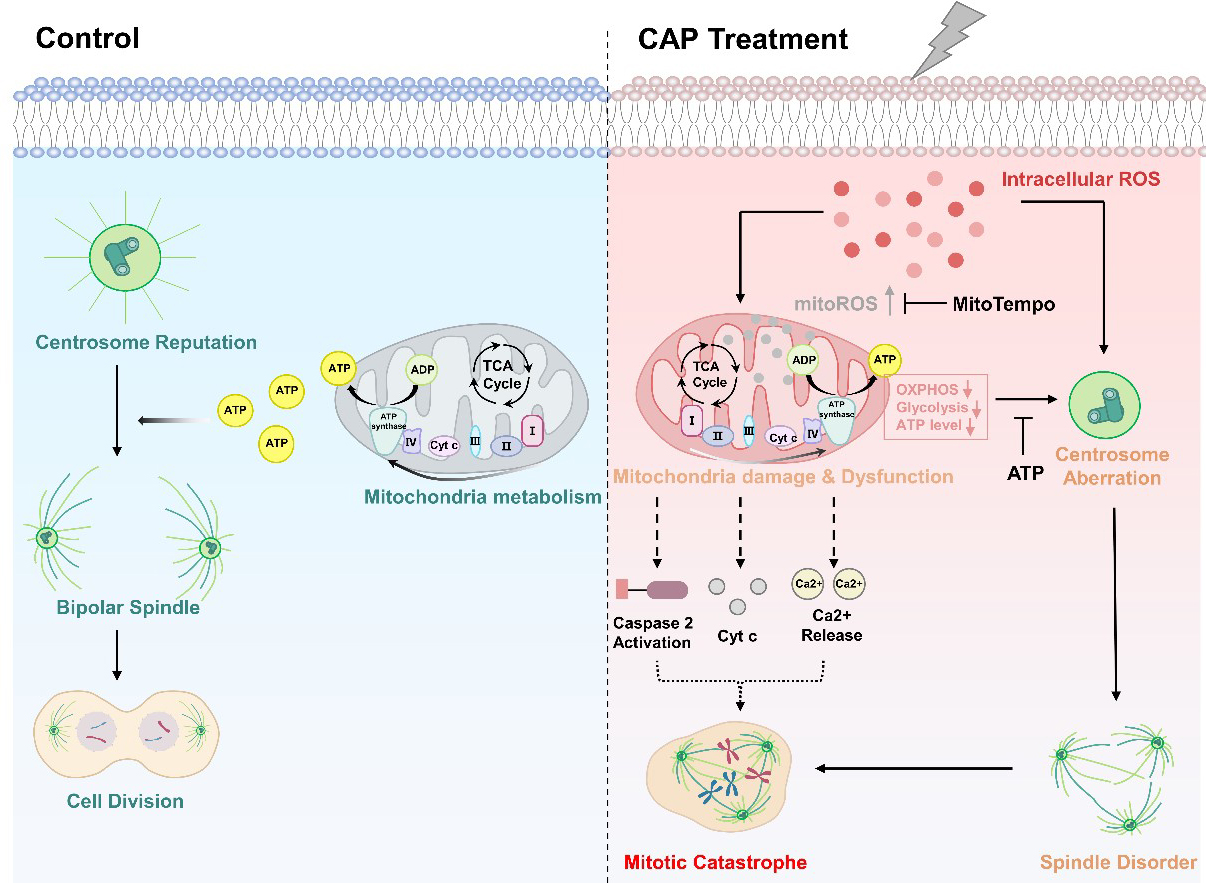
The mechanism of CAP induced mitotic catastrophe. (Image by NIE Lili)
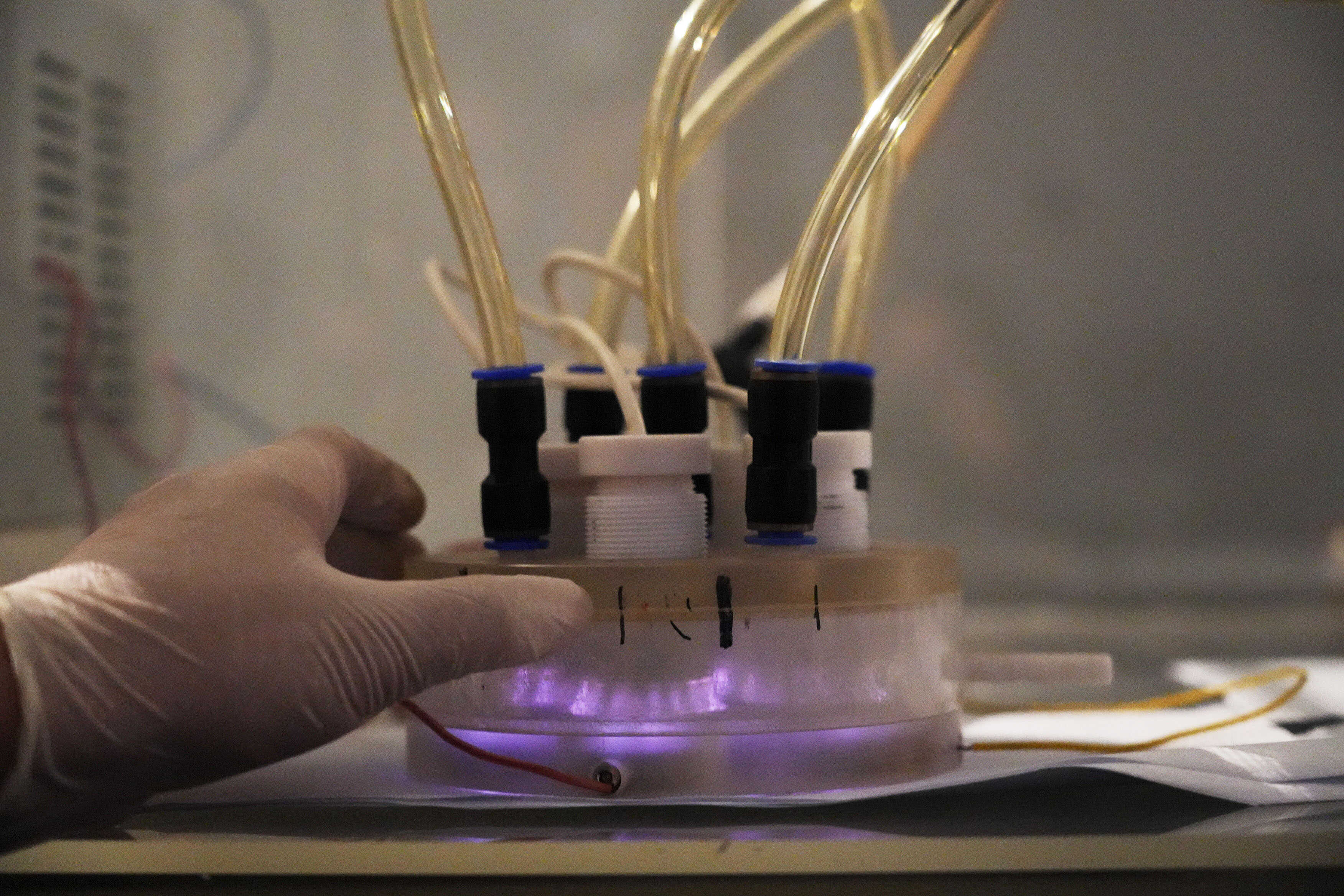
Under the influence of electrodes, low-temperature plasma emits a purple glow in the laboratory. (Image by ZHAO Weiwei)