2024


African swine fever virus (ASFV) possesses a unique transcription mechanism, enabling precise regulation of gene expression independently within host cells. However, due to the absence of structural information on the native viral RNA polymerase (vRNAP) complex, the biological processes, assembly, and regulatory mechanisms underlying ASFV transcription have remained unclear.
Recently, researchers from the Institute of Biophysics of the Chinese Academy of Sciences, and the Harbin Veterinary Research Institute of the Chinese Academy of Agricultural Sciences, isolated and resolved the high-resolution cryo-electron microscopy structure of the vRNAP from ASFV-infected porcine macrophages. This includes the structures of the vRNAP in complex with endogenous DNA and with the viral protein M1249L.
They found that M1249L plays a role not only in viral capsid assembly but also in the formation and transcriptional regulation of vRNAP. This study was published in Nature Communications on November 20, 2024.
Bioinformatics analysis revealed that ASFV encodes eight subunits of vRNAP as well as transcription factors homologous to those in eukaryotes. Using natural extraction methods, the researchers obtained the native conformation of ASFV vRNAP during infection and identified M1249L as a multifunctional protein involved in the formation of the viral transcription complex.
A luciferase reporter assay demonstrated that M1249L significantly enhances vRNAP activity in a dose-dependent manner. The different binding states of M1249L with vRNAP revealed its dynamic roles throughout the infection process.
The researchers propose that M1249L acts as a temporary transcription factor in the early stages of infection, facilitating the binding of viral gene promoters and transcription initiation.
Combining structural and dynamic analyses of the ASFV vRNAP and M1249L protein complex, the researchers proposed a model of dynamic catalytic regulation that controls viral gene transcription throughout the viral lifecycle.
This study sheds light on the specific biological processes, assembly, and regulatory mechanisms of ASFV transcription, offering valuable insights that could inform strategies for the prevention and treatment of ASFV infections.
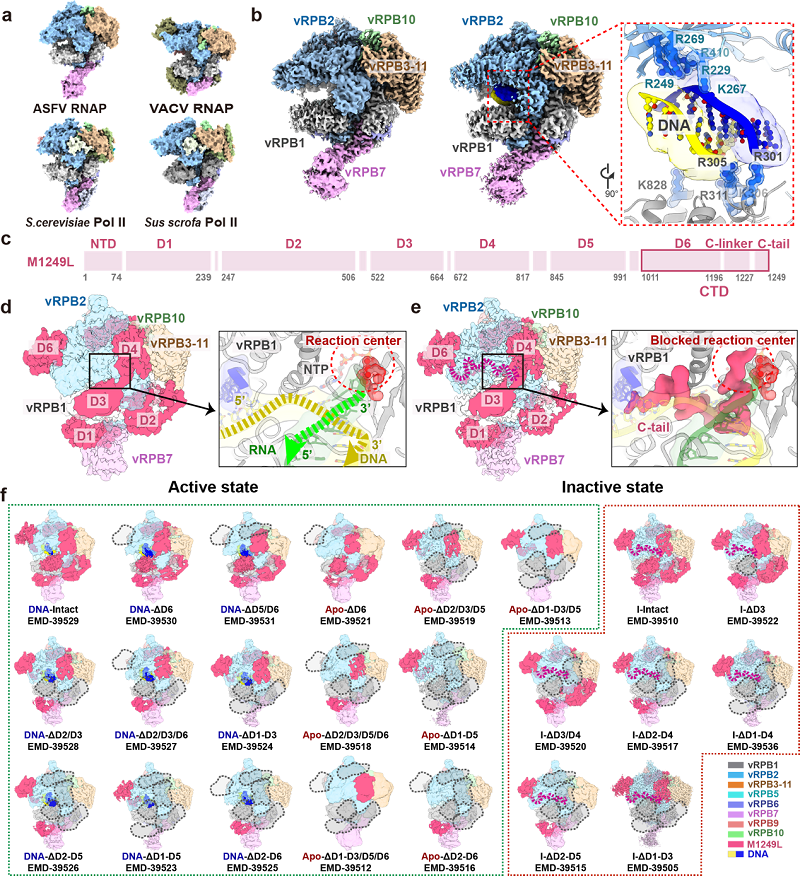
Fig. 1 The Cryo-EM structure of the native RNA polymerase-M1249L protein complex in African swine fever virus (Image by RAO Zihe's group)
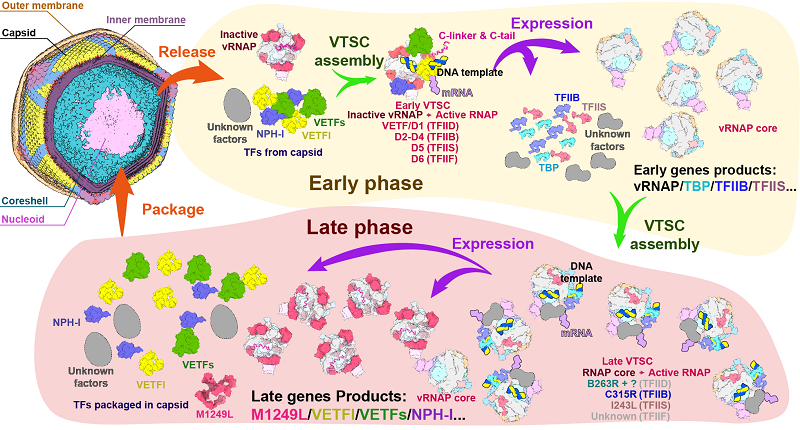
Fig. 2 The gene transcription regulation model in the lifecycle of African swine fever virus (Image by RAO Zihe's group)