
2024


A research team led by Prof. LI Mei from the Institute of Biophysics of the Chinese Academy of Sciences, has elucidated the high-resolution structure of the photosystem II (PSII)-light-harvesting complex in cryptophytes.
This study not only provides a structural basis for understanding the photoregulation mechanisms of these photosynthetic organisms but also offers new insights for improving the light energy utilization efficiency in plants and increasing crop yields.
This study was published on August 9, 2024, in Nature Communications.
Cryptophytes are a type of unicellular eukaryotic microalgae that possess a highly unique light-harvesting antenna, including chlorophyll a/c binding proteins (CAC) located within the thylakoid membrane and phycobiliproteins (PBP) bound to the outer side of the thylakoid membrane.
The research team isolated and extracted samples of the cryptophyte PSII-CAC complex from cells during their stationary growth phase and resolved its single-particle cryo-electron microscopy structure at a resolution of 2.6 Å.
The structure revealed that the binding mode of the PSII core with the light-harvesting antenna CAC in cryptophytes significantly differs from that of other reported photosynthetic organisms. The CAC proteins are arranged in a band-like manner on both sides of the PSII core.
Additionally, a new core-antenna linker protein, CAL-II, was discovered within the complex, which is crucial for the formation and stability of the entire complex.
The study also identified the pigment molecules within the complex and mapped the energy transfer pathways between the CAC antenna and the PSII core, exploring the assembly and functional mechanisms of the cryptophyte PSII-CAC complex.
This work provides structural foundations and novel insights for understanding the light energy utilization and environmental adaptation mechanisms of cryptophytes.
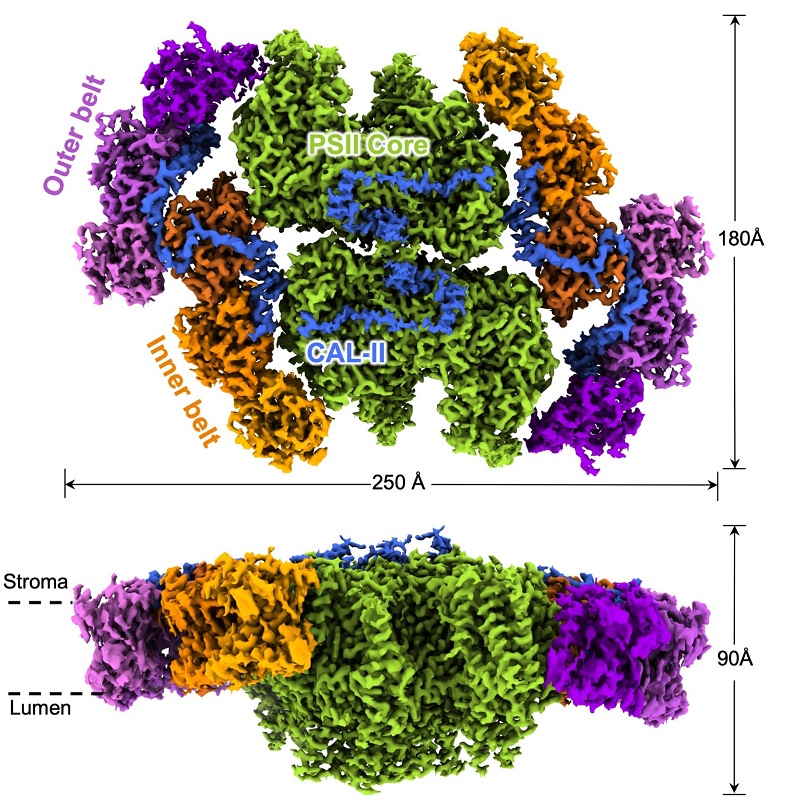
Figure 1. Cryo-EM reconstructure of PSII-CAC complex (Image by LI Mei's group)
