2024


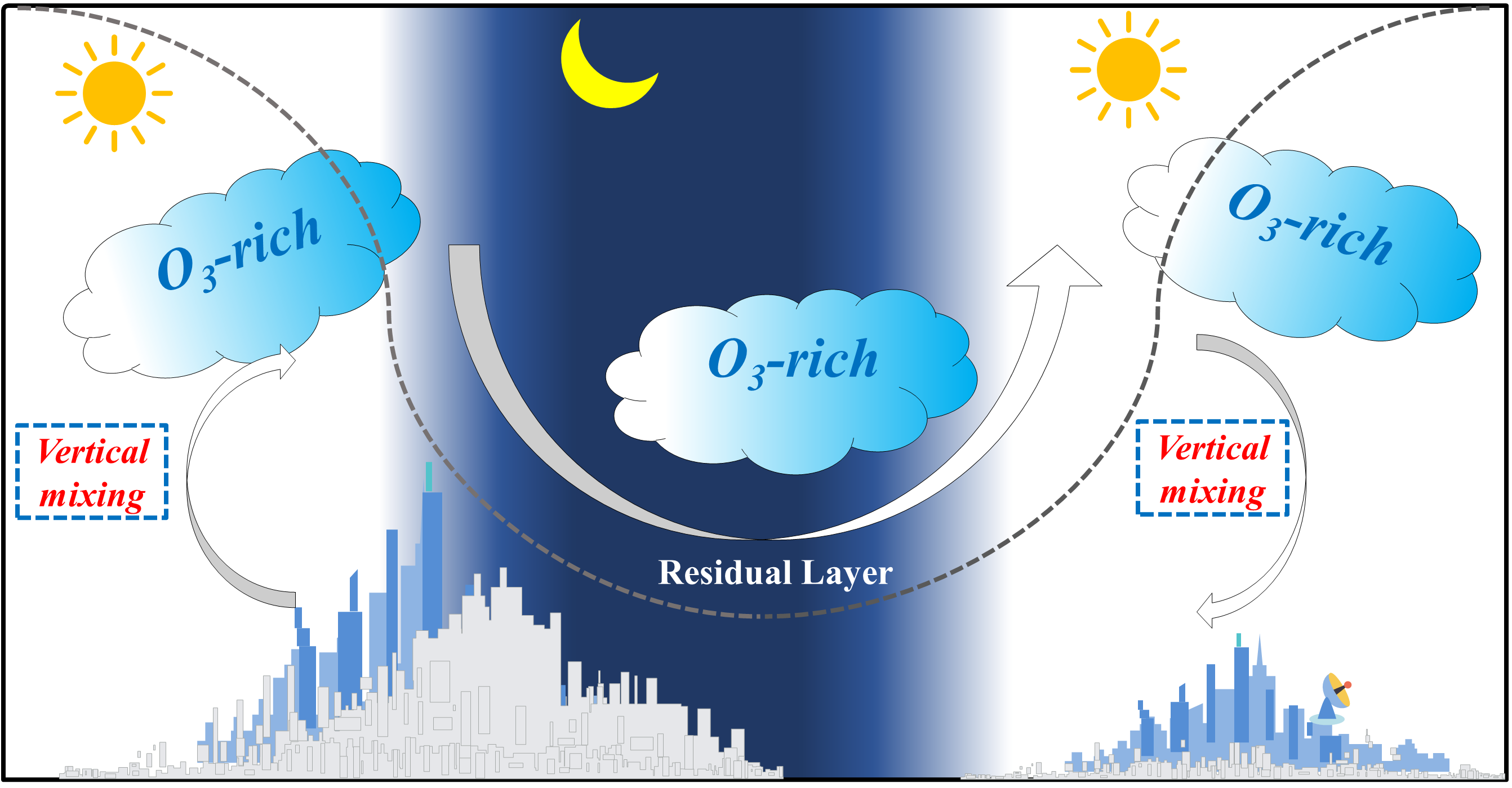
A group of researchers led by Prof. XIE Pinhua from the Hefei Institutes of Physical Science of the Chinese Academy of Sciences identified key synoptic weather patterns (SWPs) linked to severe ground-level ozone pollution in the Yangtze River Delta (YRD), and established the relationship between SWPs evolution and persistent heavy ozone pollution in terms of ozone formation and transport, through analysis on the long-term trend of ozone in this area.
Results of their study were published in Science of the Total Environment and Journal of Environmental Sciences, offering potential solutions to prevent and control heavy ozone pollution.
High concentrations of tropospheric ozone are a major summer air pollutant, posing severe threats to human health and crop growth. In recent years, ozone concentrations in the YRD have shown fluctuating trends. However, their driving factors, the multi-scale transport processes and the sources remain unclear.
In the study, based on multi-source data and numerical models, the researchers discovered that changes in emissions were the main cause of recent fluctuations in ozone levels, with emissions causing an increase in ozone during colder seasons.
They also found that typhoon peripheral patterns are one of the main weather patterns causing severe ground-level ozone pollution in Hefei, a central city in China. In addition, these ozone sources were linked to southeast transport pathways.
Furthermore, the research identified that alternating weather patterns, such as cold front passages and typhoon circulations, caused ozone to move from northern China to the YRD and then to the ocean, which eventually brought it back to the land.
"These findings provide a deeper understanding of the meteorological mechanisms and the formation and transport processes of severe ozone pollution in the YRD," according to Prof. XIE.
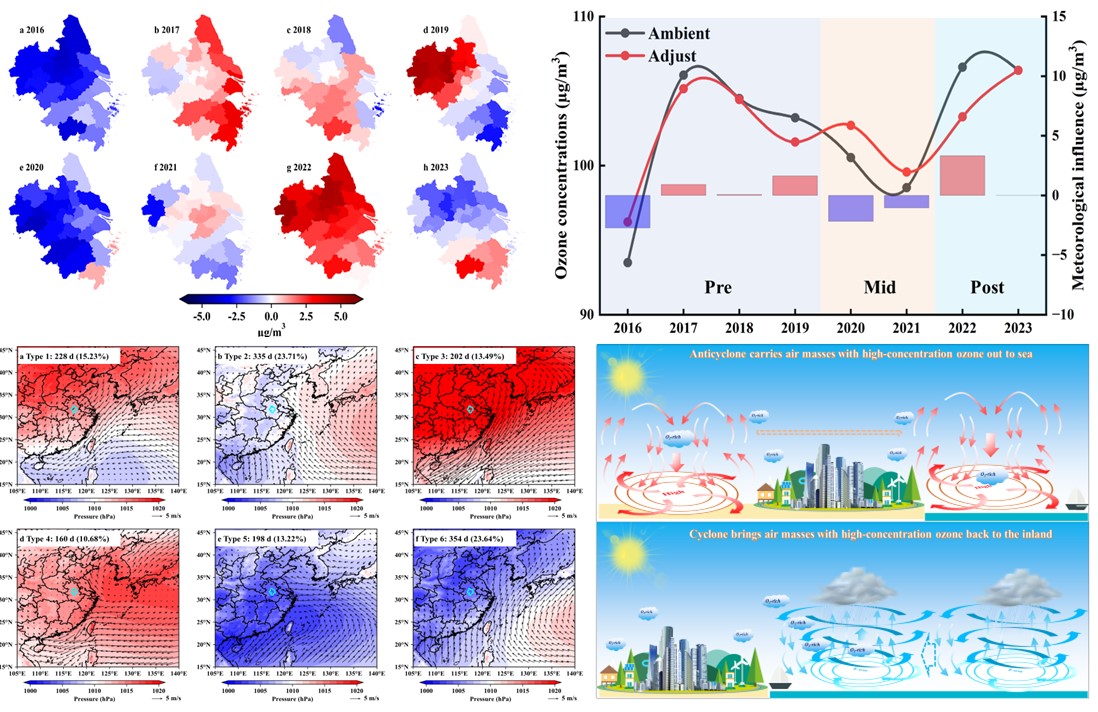
Figure: Interannual variation, synoptic weather patterns classification and multi-scale transport processes of ozone in the Yangtze River Delta. (Image by HU Feng)