2023


Balanophora J.R. Forst. & G. Forst. is a perennial succulent holoparasitic genus in the family Balanophoraceae and consists of 23 accepted species. Balanophora species are among the most unusual flowering plants, with yellow, orange, or crimson inflorescences emerging from warty tubers attached to their host plants. They have greatly reduced morphologies, such as tiny flowers, and rough leaves and are found parasitizing on the roots of ever-blooming trees with conspicuous leaves, particularly in the families Urticaceae, Fagaceae, Ericaceae, and Leguminosae. These plants are completely dependent on their host plants for acquiring nutrients.
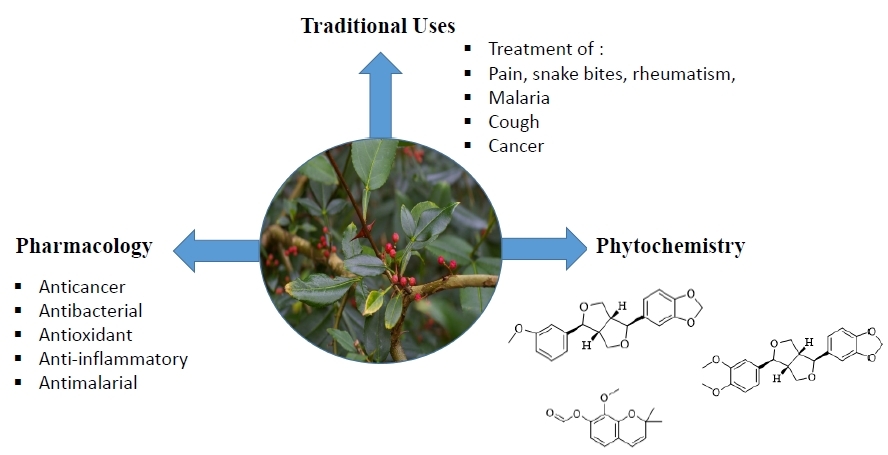
Species in this genus are widely used in Asia especially for the treatment and management of various conditions such as hemorrhoids, stomachaches, hemoptysis, syphilis, gonorrhoea, wounds, coughs, bleeding of the alimentary tract and other conditions. Despite its widespread use in traditional medicine, there is no review work on the genus' traditional applications, phytochemistry, and pharmacology.
Researchers from the Wuhan Botanical Garden of the Chinese Academy of Sciences (CAS) systematically assessed the traditional uses, phytochemistry, and pharmacology of the genus Balanophora, discussed its medicinal potential, modern scientific research, and the relationship between them, and made some recommendations to promote the further development and utilization of the genus.
They reviewed research articles related to this genus published between 1936 and April 2023, obtaining a total of 159 published papers. Other databases used to collect information on this genus were Sci-Finder, Google Scholar, and PubMed. Research also employed China National Knowledge Infrastructure database to gather Chinese literature. World Flora Online was used to verify the botanical names of this genus, while ChemBioDraw Ultra Version 22.2 software was used to illustrate the chemical structures.
Nine species (B. harlandii, B. japonica, B. polyandra, B. fungosa, B. fungosa subsp. indica, B. laxiflora, B. abbreviata, B. tobiracola, and B. involucrata) have been reported to be used as traditional medicines in different parts of Asia. A total of 159 chemical compounds have been isolated from this genus, including tannins, flavonoids, sterols, lignans, chalcones, terpenes, and phenylpropanoids. Among them, tannins, lignans, terpenoids, chalcones and phenolic acids contribute to the pharmacological effects of this genus. These compounds and extracts from the species of this genus have been reported to have diverse pharmacological activities including anti-inflammatory, anti-oxidant, hypoglycemic activity, cytotoxicity, anti-microbial, melanin synthesis etc.
The genus Balanophora has promising prospects as a potential candidate for drug discovery for treating several diseases. Therefore, more detailed research studies are required, toxicological studies both in vivo and in vitro and the mode of action before clinical trials are need to be conducted.
The review paper entitled "The genus Balanophora J. R. Forst. & G. Forst. – its use in traditional medicine, phytochemistry, and pharmacology: A review" was published in the Journal of Ethnopharmacology.
This work was supported by the National Natural Science Foundation of China, the National Science & Technology Fundamental Resources Investigation Program of China, The Alliance of International Science Organizations, and the Sino-Africa Joint Research Center of CAS.
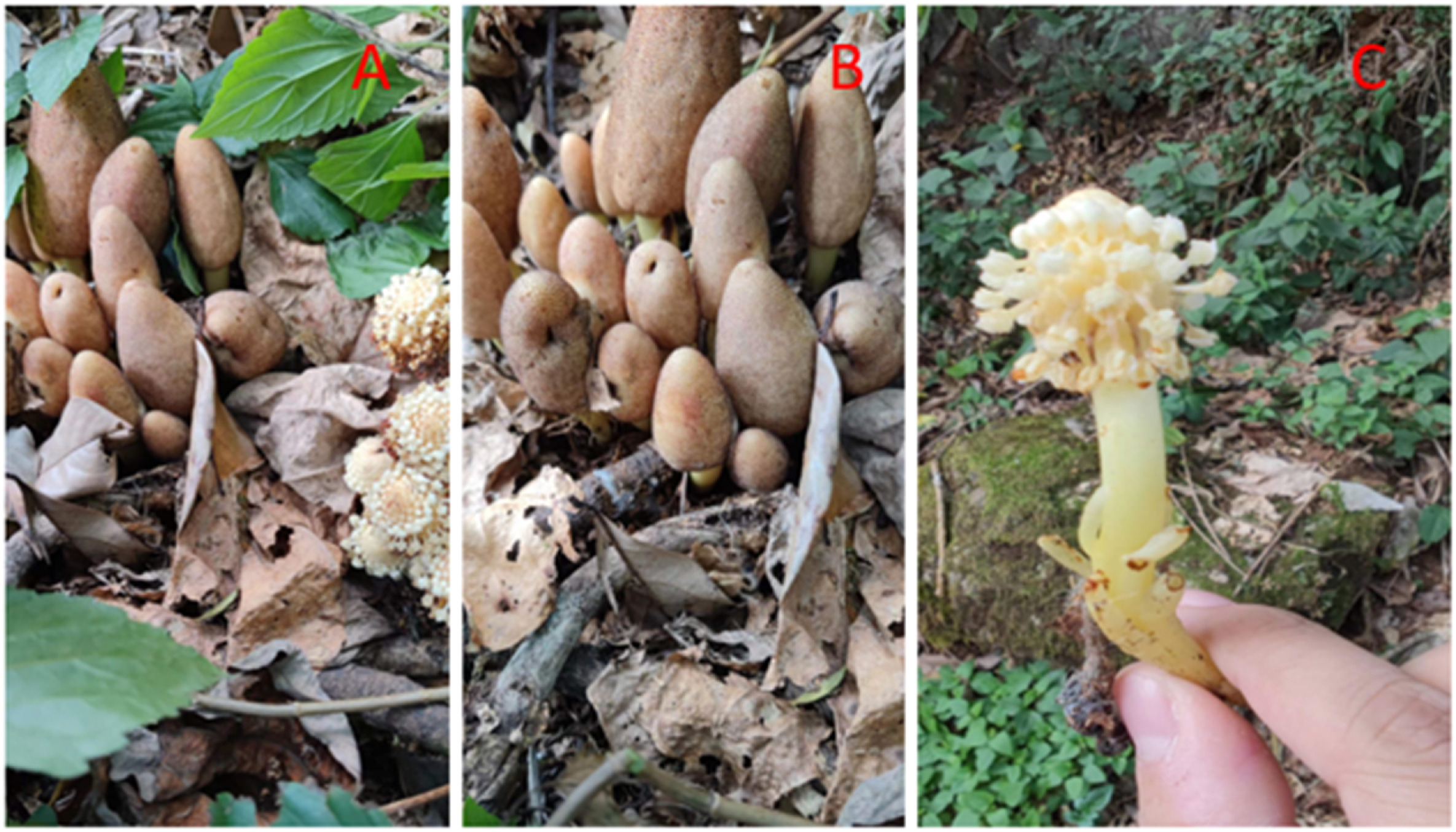
Balanophora harlandii: A) male and female inflorescences; B) female inflorescence; C) male inflorescence (Credits: DONG Xiang)