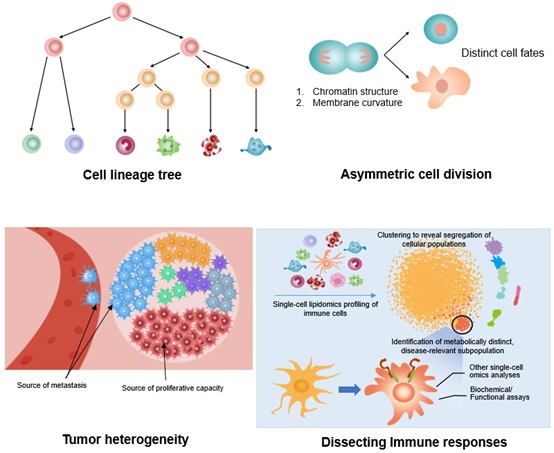
According to the researchers, the development of single-cell lipidomics is still in its early stage and more biological and clinical applications will emerge as the field advances. Technological breakthroughs have revolutionized the way we approach biology, marked by a transition from bulk assays to a focus on single molecules and single cells.
As they examined the biological tissues at higher resolution, subtle differences were revealed that can open up new avenues of research, providing unique answers to long-standing questions in various aspects of basic biology and clinical medicine.
However, technical bottlenecks in single-cell lipidomics, especially low analytical coverage and problems with accurate identification and quantification, limit its wide application. Continued efforts are urgently needed to overcome these barriers.
In general, the researchers summarized the current technological advances and bottlenecks in single-cell lipidomics, and discussed the unique technical challenges in analyzing lipids within single cells, with particular emphasis on the importance of accurate lipid identification and quantification.