News Archives


A newly published study on Small Methods provides a new idea for improving the electrochemical properties of layered materials.
The research team, led by Prof. ZHU Xuebin from the Hefei Institutes of Physical Science of the Chinese Academy of Sciences, prepared layered double hydroxides (LDHs) with abundant active sites and promising loading mass on carbon cloth, for the first time, via magneto-electrodeposition (MED) technique.
Aside from that, the scientists constructed a flexible hybrid supercapacitor with high energy density and excellent cycle stability. To prove the performance, electronic watch and LED lights were successfully driven in their experiments.
LDHs prepared on carbon cloth are regarded as ideal cathodes for portable electronic hybrid supercapacitors. Electrodeposition is a simple, time-saving and economical technique suitable for large-scale production.
In this study, a magnetoelectric deposition device was developed and nickel-cobalt (NiCo)-LDH was prepared on carbon cloth by MED technology.
"This new technique, by adjusting the microstructure of NiCo-LDH, can greatly speed up mass transfer during electrodeposition," said LI Hui, a member of the team, "compared with traditional methods, electrodeposition is time-saving, economical, convenient and suitable for large-scale production."
This study provides a new way for preparing high-performance LDHs supercapacitor electrodes.
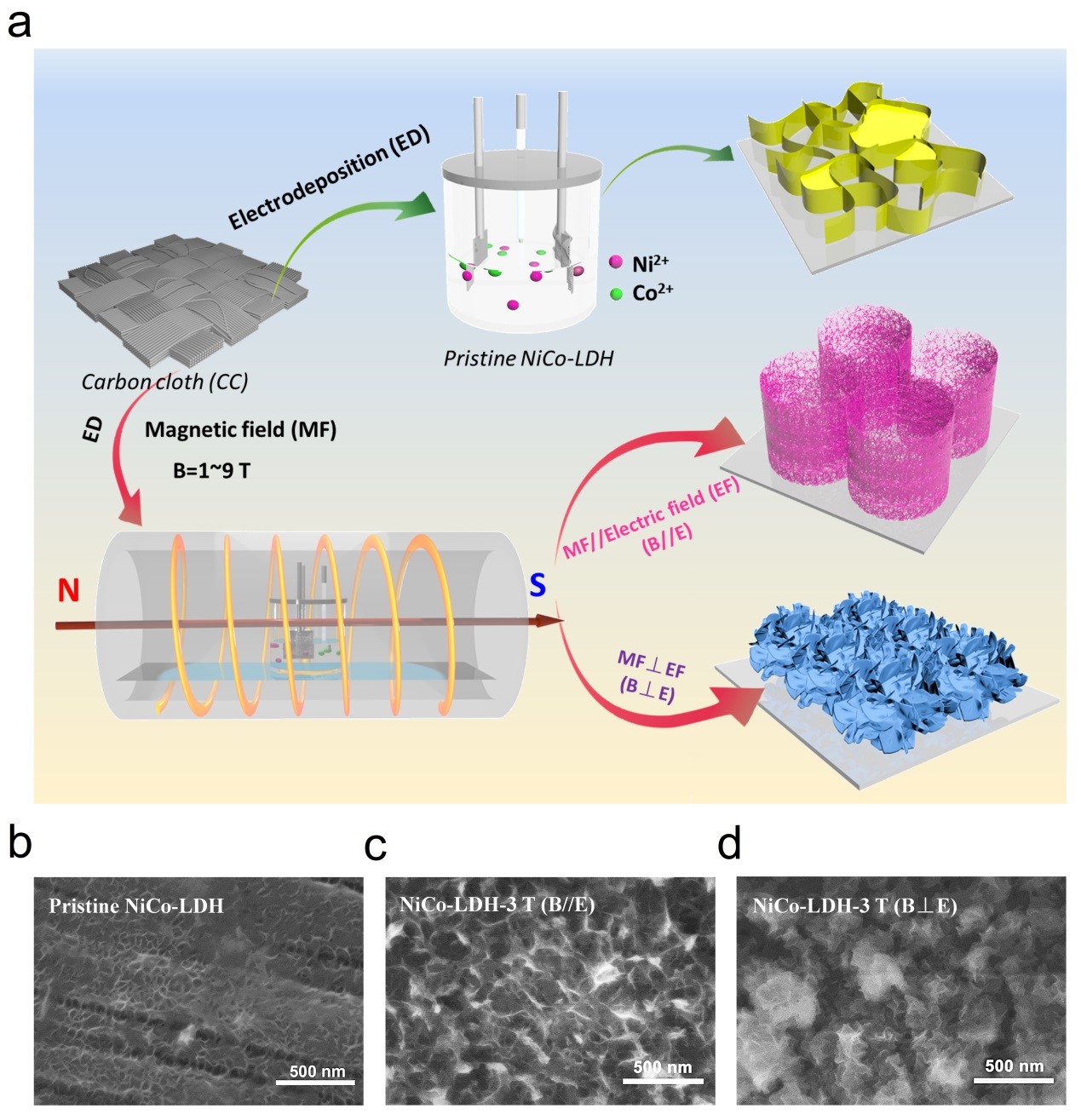
Figure 1. Schematic illustration of the preparation of NiCo-LDH on carbon cloth. (Image by LI Hui)
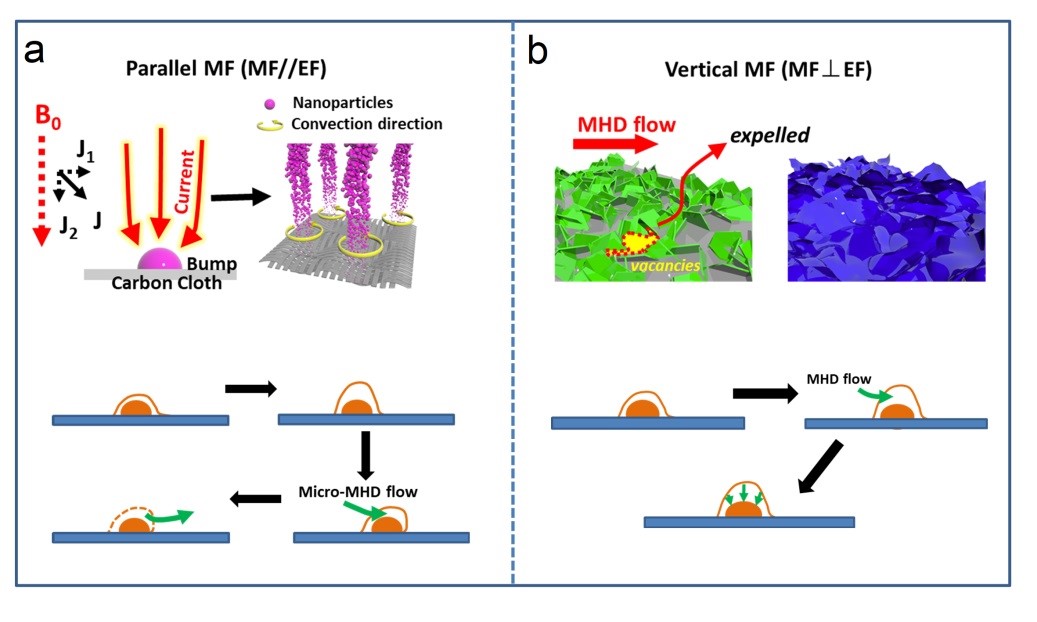
Figure 2. (a) Micro-magnetohydrodynaic effect (upper) and nucleation process under parallel MF (bottom); (b) magnetohydrodynaic effect (upper) and nucleation process under vertical MF (bottom). (Image by LI Hui)
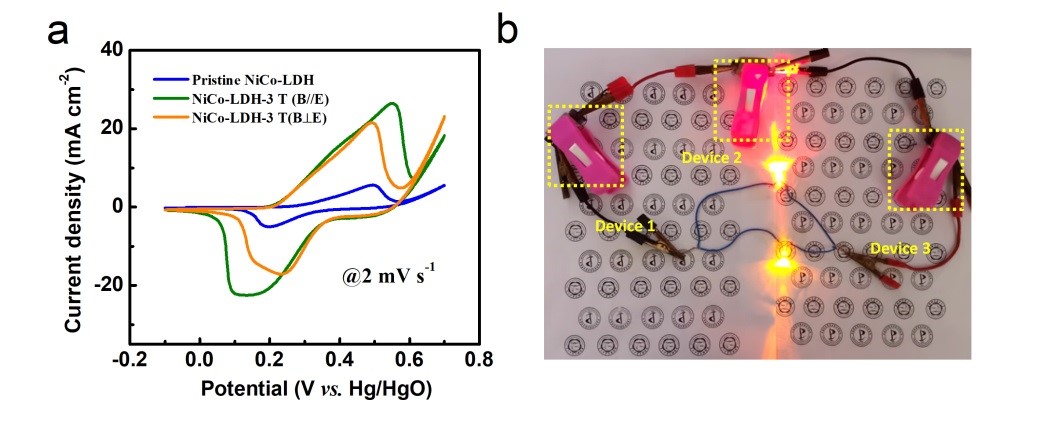
Figure 3. (a) Electrochemical performances of samples prepared under magnetic fields; (b) LED lights were successfully driven by as-assembled devices. (Image by LI Hui)