
THE 5TH WORLD CONGRESS OF BIOSPHERE RESERVES


Located in Liaoning Province, Northeast China, Snake Island and Laotie Mountains form a unique natural pair. Sitting at the southern tip of the Liaodong Peninsula, the funnel-shaped terrain faces the Bohai Sea, offering the shortest and most ideal passage for migratory birds crossing the strait.
Thanks to its exceptional ecological value, this area was designated a UNESCO Biosphere Reserve in 2013, covering an area about 2.8 times the size of Macau.

Though just 73 hectares — roughly the size of 102 football fields —Snake Island is the only habitat of nearly 20,000 Shedao Island pit vipers, a venomous snake species found nowhere else on Earth.
Across the strait, Laotie Mountains is a vital stopover for migrating birds. Each year, tens of millions of them — from tiny passerines to powerful raptors — soar over its ridgeline in a breathtaking journey.
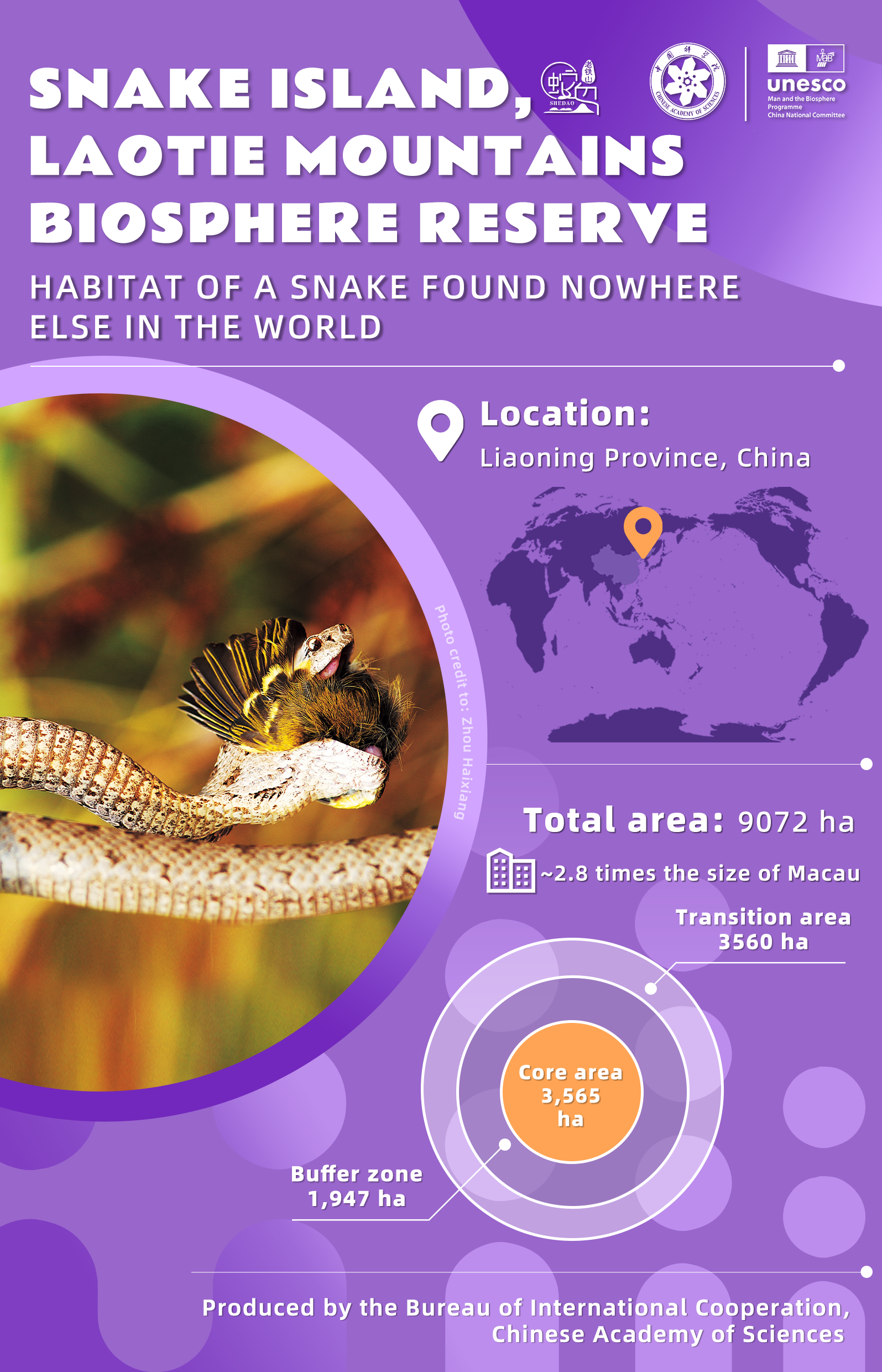
Small migratory birds that pause during their journey are the primary food source for Shedao Island pit vipers. Active only briefly in spring and autumn, they strike with remarkable precision and follow an exceptionally rare feeding rhythm.
To conserve energy, the vipers enter summer dormancy during the hottest months and hibernate through the winter—patiently awaiting the return of the next migration season.
This unique survival strategy reflects the quiet wisdom of nature and has shaped a distinctive ecological system with clear seasonal rhythms — found only in the Snake Island–Laotie Mountains region.
